


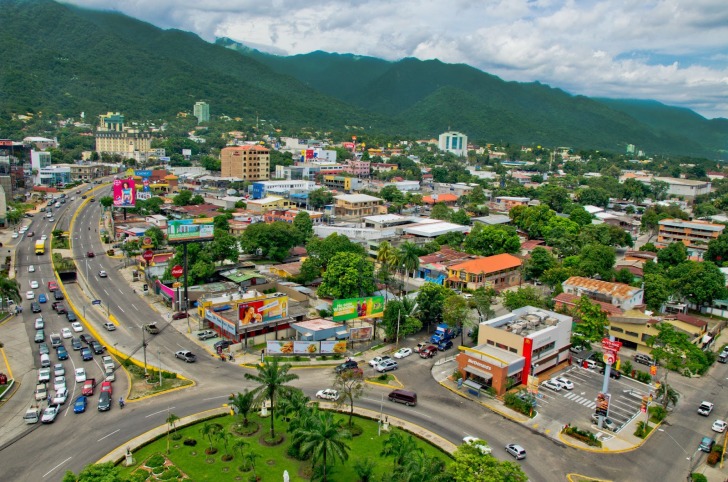
San Pedro Sula sits in the lush Sula Valley of northwestern Honduras, framed by the Merendón Mountains and fueled by the Ulúa River.
It is the country’s industrial powerhouse, a city of factories, commerce, and nonstop motion.
For years, it carried the heavy label of one of the most dangerous cities in the world.
That reputation still echoes online.
But here is what I discovered after digging into the data and speaking with travelers and locals: San Pedro Sula is complicated.
It is not a polished tourist playground like the Bay Islands.
It is a working city with real challenges and very real risks.
Yet it is also a gateway to some of Honduras’ most beautiful regions and home to vibrant culture, food, and resilient people.
So how safe is it really?
Let’s break it down honestly and thoroughly.
Warnings & Dangers in San Pedro Sula

OVERALL RISK: HIGH
San Pedro Sula has historically recorded high homicide and gang activity rates. While violent crime has decreased compared to peak years in the early 2010s, the city still struggles with gang presence and organized crime. Tourists are rarely targeted specifically, but collateral risk exists. Situational awareness is absolutely essential here.

TRANSPORT & TAXIS RISK: MEDIUM
Public buses are not recommended for tourists due to robbery risks and occasional gang extortion. Unofficial taxis can also pose problems. Using hotel-arranged taxis or ride apps when available is safer. Private transfers are the most secure option, especially at night.

PICKPOCKETS RISK: MEDIUM
Petty theft is common in crowded markets, bus terminals, and downtown commercial areas. Phone snatching and bag theft happen, particularly if valuables are visible. Travelers who keep belongings discreet and avoid flashing electronics significantly reduce their risk.

NATURAL DISASTERS RISK: MEDIUM
Honduras lies in a hurricane-prone region. Heavy rains, flooding, and landslides can occur, especially from June to November. Earthquakes are less common but possible. Travelers during hurricane season should monitor weather alerts carefully.

MUGGING RISK: HIGH
Armed robberies do occur, often in certain neighborhoods and at night. Crimes are typically opportunistic rather than random acts against tourists, but walking alone after dark is strongly discouraged. Many incidents involve locals; however, foreigners are not immune.

TERRORISM RISK: LOW
There is no significant pattern of terrorism directed at tourists in San Pedro Sula. The primary concerns are criminal rather than politically motivated violence.

SCAMS RISK: MEDIUM
Common scams include overcharging by taxis, fake police checkpoints, and distraction theft schemes. Financial scams are not widespread for tourists, but vigilance is necessary when exchanging money or withdrawing cash.

WOMEN TRAVELERS RISK: HIGH
Solo female travelers can visit, but extra caution is required. Harassment can occur, especially at night. Dressing modestly and avoiding isolated areas improves safety. Many women travel through without incident when staying in reputable accommodations and arranging transport carefully.

TAP WATER RISK: HIGH
Tap water is not considered safe for drinking. Even locals often rely on purified water. Stick to bottled or properly filtered water for drinking and brushing teeth.
Safest Places to Visit in San Pedro Sula
While San Pedro Sula is not overflowing with tourist districts, there are areas that feel significantly safer and more controlled.
Zona Viva is one of the more modern and secure parts of the city.
It hosts international hotels, restaurants, shopping centers, and security presence.
Most business travelers stay here.
Streets are better lit, and private security is common.
Museo de Antropología e Historia offers a calm cultural stop where visitors can learn about the region’s indigenous heritage and industrial growth.
The museum area is generally safe during the daytime.
Parque Central can be visited during daylight hours.
Like many central squares in Latin America, it is lively and social during the day but should be avoided at night.
Nature lovers should consider Cusuco National Park, located outside the city in the Merendón Mountains.
Hiring a reputable guide for hiking trips here is the safest approach.
The park offers cloud forests and cooler temperatures, far removed from urban tension.
Most travelers use San Pedro Sula as a transit point to Copán Ruinas or the Bay Islands.
Organized tours departing from reputable hotels are the safest way to explore beyond the city.
Places to Avoid in San Pedro Sula
Certain neighborhoods carry higher concentrations of gang activity and violent crime.
Visitors should avoid:
Chamelecón
Historically one of the most dangerous districts in the city.
High gang presence and poverty contribute to elevated crime rates.
Rivera Hernández
Known for gang territorial disputes.
Not a place for tourists under any circumstances.
Cofradía
Located on the outskirts, this area has experienced violent incidents and should not be visited casually.
Unlit residential areas at night
Even outside high risk neighborhoods, walking after dark significantly increases vulnerability.
Robberies frequently occur in poorly lit streets.
Public bus terminals late at night
These areas attract opportunistic criminals.
If arriving late, arrange hotel pickup in advance.
The key rule here is simple: if there is no clear tourist reason to be in a neighborhood, do not wander into it.
Safety Tips for Traveling to San Pedro Sula
- Book a Reputable Airport Pickup from Ramón Villeda Morales International Airport. Do not improvise transportation when you land. Arrange a hotel transfer or a vetted private driver before arrival. The airport itself is generally orderly, but walking outside to negotiate with random drivers is unnecessary risk. Confirm your driver’s name and vehicle details in advance, and avoid sharing ride information with strangers in the terminal.
- Base Yourself in Zona Viva or a Gated Hotel Compound. Location matters enormously in San Pedro Sula. Stay in Zona Viva or other well known commercial areas with visible private security and controlled access. Choose hotels with 24 hour guards, surveillance cameras, and on site restaurants so you minimize unnecessary nighttime movement.
- Treat Nightfall as a Curfew for Walking. Even short evening strolls can increase vulnerability. If you want dinner outside your hotel, take a short arranged taxi ride rather than walking, even if the destination looks close on a map. Streets that feel calm during the day can become nearly empty at night, which increases the likelihood of opportunistic robbery.
- Never Use Public Buses Inside the City. Urban buses have historically been targets for robbery and gang extortion. Even locals who can avoid them often do. As a visitor, there is little upside and considerable downside. Stick with hotel arranged taxis or reputable ride services. The extra cost is worth the security.
- Avoid “Shortcut Culture” and Unplanned Detours. GPS can route you through unfamiliar residential zones. In this city, avoid cutting through side streets or exploring out of curiosity. If you are heading to Parque Central or a museum, go directly there and back using main roads. Wandering without a plan is not wise here.
- Limit What You Carry and Use a Low Profile Strategy. Leave passports locked in your hotel safe and carry only a copy plus minimal cash. Use a plain backpack rather than a flashy designer bag. Avoid wearing expensive watches or jewelry. Phone snatching does occur, so avoid texting near busy intersections or from car windows.
- Withdraw Cash Inside Banks or Major Shopping Centers Only. Standalone street ATMs are vulnerable spots. Instead, use ATMs located inside banks or large malls during daylight hours. Shield your PIN, and avoid counting money openly after withdrawal. If possible, take out moderate amounts rather than large sums.
- Do Not Photograph Security Forces, Police, or Poor Neighborhoods. Photography that seems harmless to you may attract unwanted attention. Avoid taking pictures of police, military checkpoints, or residential areas that look economically distressed. It can be misinterpreted and lead to uncomfortable encounters.
- Monitor Weather Alerts During Hurricane Season. From June through November, heavy rainfall can disrupt roads and cause flooding. San Pedro Sula has experienced severe flooding in the past. If traveling during these months, monitor forecasts daily and allow buffer time in your itinerary in case of transport disruptions.
- Use San Pedro Sula as a Gateway, Not a Base for Exploration. The city is often best treated as a transit hub to Copán Ruinas or the Bay Islands. Schedule daytime departures and avoid late night bus trips. If you must stay overnight, keep activities structured and limited to secure areas rather than attempting broad exploration.
So... How Safe Is San Pedro Sula Really?
San Pedro Sula has undergone significant change over the past decade.
Homicide rates that once exceeded 150 per 100,000 residents have dropped substantially, but they remain high compared to global averages.
Gang activity and organized crime still exist, though violence is often concentrated in specific neighborhoods.
Tourists are not the primary targets of violent crime.
Most incidents involve local gang disputes.
However, the presence of organized crime increases overall risk.
This is not a city for carefree wandering.
With careful planning, secure accommodations, private transportation, and strict situational awareness, many travelers pass through without incident.
Still, compared to many Latin American destinations, San Pedro Sula ranks on the higher end of risk.
It is best approached as a transit hub rather than a vacation base.
How Does San Pedro Sula Compare?
| City | Safety Index |
|---|---|
 San Pedro Sula San Pedro Sula |
15 |
| Tegucigalpa |
33 |
 Alabama Alabama | 80 |
| Hyannis | 80 |
 Sana’a Sana’a | 36 |
| Seaside | 74 |
 Manila Manila | 50 |
| Alaska | 65 |
Useful Information

Visas
Citizens from the United States, Canada, the EU, and many other countries can enter Honduras visa free for up to 90 days. There is usually a small entry fee included in airline tickets. Always ensure your passport has at least six months validity.

Currency
The local currency is the Honduran Lempira. US dollars are sometimes accepted in hotels, but using local currency is better. Exchange money at banks or withdraw from secure ATMs inside shopping centers.

Weather
San Pedro Sula has a tropical climate with high humidity year round. Expect temperatures between 75°F and 95°F. Light breathable clothing is essential, along with rain gear during hurricane season.

Airports
Ramón Villeda Morales International Airport is the main airport serving the city. It is about 20 minutes from downtown. Pre arranged hotel transfers are strongly recommended for safe arrival.

Travel Insurance
Travel insurance is strongly recommended. Choose a policy that covers medical emergencies, evacuation, and trip interruptions. Healthcare facilities are limited compared to the US, and evacuation coverage can be critical.
San Pedro Sula Weather Averages (Temperatures)
Average High/Low Temperature
| Temperature / Month | Jan | Feb | Mar | Apr | May | Jun | Jul | Aug | Sep | Oct | Nov | Dec |
|---|---|---|---|---|---|---|---|---|---|---|---|---|
| High °C |
27 | 28 | 30 | 32 | 33 | 32 | 31 | 31 | 31 | 30 | 28 | 27 |
| Low °C |
20 | 20 | 21 | 22 | 23 | 23 | 23 | 23 | 23 | 22 | 21 | 20 |
| High °F |
81 | 82 | 86 | 90 | 91 | 90 | 88 | 88 | 88 | 86 | 82 | 81 |
| Low °F |
68 | 68 | 70 | 72 | 73 | 73 | 73 | 73 | 73 | 72 | 70 | 68 |
Honduras - Safety by City
| City | Safety Index |
|---|---|
| San Pedro Sula | 15 |
| Tegucigalpa | 33 |




gun
i was shotted
Yes. You probably were.
agreed
Ridiculous
Most dangerous city in the world, really? It can’t be worse than Liverpool.
The statistics say otherwise.
not as dangerous as yorkton
The best part I enjoyed was all the gals looking me over like a piece of candy in a candy store. I thought it might be my imagination until my wife got mad & told me to quit flirting. If you are used to that you might not notice but that has never happened to me before or since.
You looked like you were able to pay.
No problems for me
While I wouldn’t wander the streets alone at night – which is something I don’t do regardless where I’m traveling – I wouldn’t take this city off the list just because they have a high-crime rate, this isn’t tourist-related, it’s drug-related.
You gotta watch your back but you’ll have fun if you know where to go
Just like Colton already commented, just because the city has problems with gangs it doesn’t necessarily translate into problems for people who land in the city for a few days of fun in the sun. If you’ve had San Pedro Sula on your list and really want to visit it then go for it but make sure you know what you’re getting yourself into.
Since we’re talking about a city that was once the murder capital of the world I would exercise caution when exploring the city. To be honest, I visited the city along with other friends so I have no idea what would have been like for a solo traveler. Our travel agent basically said we had to act as normal as possible while not flaunting any possessions when we’re out.
Ubering around is way safer than using public transport and it’s downright cheap so we made this our go-to means of transportation.
Roatan is an island that would appeal to most tourists, the offshore reefs make it perfect for divers of all levels. The locals are both polite and friendly. Let’s face it, most of their income comes from tourism and they know it.
When talking about San Pedro Sula I find it best to talk about caution. Being aware of your location, not sharing where you’re going or where you’re meeting with random strangers, carrying as little cash as possible, all these are things that will prevent you from standing out from the crowd, no matter where you’re traveling.
If you’re here for the nightlife I would be extra careful not to get drunk, regardless if you plan to use an uber after or not. Being on top of your game is vital, otherwise you might find yourself a target for midnight robbery.
Wow, that was a long typing session. But to recap, this city is far from being the kind of city where you can do what you please, when you please. Common sense will get you a long way.
Sleep at airport or stay in hotel
Thanks for the advice! I thought about staying one night in a hotel in San Pedro Sula, but maybe I’ll just fly directly to Roatan or I’ll sleep at San Pedro Sula Airport.
machine gun
the cartel shot at me with machine gun when i did not want to give them my iphone
There’s something oddly charming about the chaos of San Pedro Sula; you can’t help but appreciate the vibrant food scene and the warmth of the people even while keeping your head on a swivel.
I still get a little shaky remembering the warm smiles and how easy it was to be at the beach just an hour away, even while I kept one eye on my surroundings.
I spent a week doing deliveries and walking by the Ulúa at dusk felt tense, yet the baleadas from that corner stand kept me coming back.
After a sweaty afternoon in the mercado and getting used to the nonstop traffic, do you think the locals’ neighborhood tips really make it safe enough to wander off the beaten path?
Been there twice, the street food stalls by the central market are amazing but I still felt uneasy walking along the Ulúa River at dusk.
Strolling by the Ulúa River with the Merendón Mountains in view and the steady hum of factories all around made the city feel raw and a bit chaotic, but the food and friendly faces caught me off guard in the nicest way.
Love the people
I worked in Honduras, based out of SPS, in 2000 for several months doing flood control system repair designs/construction after Hurricane Mitch. I worked in much of the area significant distances from SPS (El Progresso, etc). At that time, I didn’t realize how dangerous the city was. I went where I needed to, when I needed to. At times, my Honduran “Brother” would not take me into some areas because of the danger. In El Progresso, there was an area the name of which translated to “where life is worth nothing”. He wouldn’t take me, so I went alone. I never had any problems, though I did get some strange looks at times by what, in hindsight, I suspect were gang members. I always carried candy for the kids, gum for the ladies, and cigarettes for the men. I suspect word got around about the “crazy gringo” who was trying to help the Honduran people. Robberies/shootouts/murders occurred at a couple of the “quick stops” where we would stop for refreshments. Yes, I still stay in touch with my Honduran “Brother”.
All this just highlights God’s protection of me. I would not recommend anyone vacationing in SPS without a good guide. I still love the Honduran people, even though one did threaten to cut my throat. My experience there was very good, but I can only give it one star as a place to vacation.