


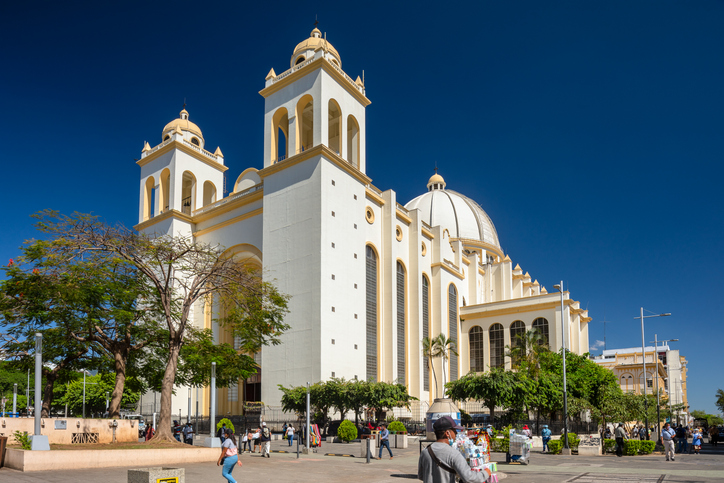
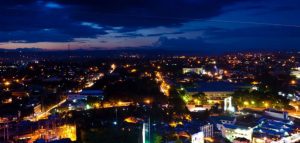
San Salvador sits in a valley ringed by volcanoes in the heart of El Salvador, Central America’s smallest country.
It is a city of sharp contrasts: modern shopping centers and rooftop restaurants stand minutes away from historic plazas and densely packed neighborhoods that once made global headlines for all the wrong reasons.
In recent years, the country has undergone a dramatic security transformation.
Homicide rates have fallen sharply compared to the 2010s, and the visible presence of police and military forces is now part of daily life.
As a travel blogger who follows safety trends closely, I can confidently say this is not the same San Salvador people were warned about a decade ago.
Still, improvements do not mean zero risk.
Safety here depends heavily on where you go, how you move around, and how well you understand the city’s geography.
Warnings & Dangers in San Salvador

OVERALL RISK: MEDIUM
San Salvador is significantly safer than it was in the past, but it remains a complex capital city with uneven safety conditions. Tourist zones and business districts are generally well patrolled and secure. However, venturing into unfamiliar residential areas can increase risk quickly. With smart planning, most travelers experience a smooth visit.

TRANSPORT & TAXIS RISK: MEDIUM
Public buses are inexpensive but not ideal for tourists due to overcrowding and inconsistent security. Registered taxis and ride-share services are widely used and generally reliable. I strongly recommend booking through your hotel or a verified app rather than hailing random street taxis, especially at night.

PICKPOCKETS RISK: MEDIUM
Petty theft is one of the most common issues visitors face. Phone snatching and bag theft can occur in crowded markets, bus stops, and busy streets. The risk is manageable if you keep valuables secured, avoid flashing electronics, and stay alert in high traffic areas.

NATURAL DISASTERS RISK: MEDIUM
San Salvador sits in an earthquake-prone region and near active volcanoes. The city has experienced significant earthquakes in the past. The rainy season can also bring flooding and landslides. While disasters are not frequent events for tourists, the geological risk is real.

MUGGING RISK: MEDIUM
Muggings have declined compared to previous years, but they still occur in certain neighborhoods, especially after dark. Tourist-heavy districts see far fewer incidents than outlying residential zones. Avoiding isolated streets at night greatly reduces risk.

TERRORISM RISK: LOW
There is no significant history of international terrorism targeting tourists in San Salvador. Security concerns in the past have centered on gang violence rather than ideological attacks. For visitors, terrorism risk is considered low.

SCAMS RISK: MEDIUM
Scams are not widespread but can include overcharging by informal taxis or small payment tricks in busy areas. Using established businesses and verifying prices in advance minimizes issues. Compared to many global capitals, scam culture is relatively limited.

WOMEN TRAVELERS RISK: MEDIUM
Solo female travelers can visit safely but should exercise caution, particularly at night. Harassment can occur in some areas, and walking alone in poorly lit streets is not advisable. Staying in secure districts and using arranged transport makes a big difference.

TAP WATER RISK: HIGH
Tap water is not considered safe for drinking. Stick to bottled or filtered water, including for brushing teeth, if you have a sensitive stomach. Bottled water is inexpensive and widely available.
Safest Places to Visit in San Salvador
The safest areas are typically modern, commercial, and well-patrolled districts.
Zona Rosa and Colonia San Benito are widely considered the safest for visitors.
This area hosts international hotels, upscale restaurants, museums, and nightlife.
Streets are well-lit, and private security is common.
It is also home to embassies and major businesses, which adds a layer of monitoring.
Colonia Escalón, particularly along Paseo General Escalón, is another strong choice.
The neighborhood blends residential zones with commercial plazas, medical facilities, and cafés.
During the day and early evening, it feels orderly and secure.
Santa Elena is an upscale district near diplomatic compounds and corporate offices.
Security presence is visible, and many business travelers stay here.
For daytime exploration, the renovated Historic Center near Plaza Libertad has improved considerably.
Police presence is strong during daylight hours, and the restored architecture makes it worth a visit.
I recommend leaving before late evening when foot traffic declines.
Modern malls such as Multiplaza and La Gran Vía also provide controlled, security-monitored environments that feel very safe.
Places to Avoid in San Salvador
Although citywide security has improved, certain districts are not appropriate for tourists without a specific reason or local guidance.
Soyapango, located northeast of the city center, has historically experienced high crime rates.
While enforcement efforts have reduced violence, it remains a densely populated residential area with little tourist infrastructure.
Apopa, north of central San Salvador, has long struggled with gang activity.
It is not a tourist destination and offers no attractions that justify the risk for visitors.
Ilopango and the peripheral outskirts can also present inconsistent security.
These areas are largely residential and lack the patrol density found in central business districts.
Even within central San Salvador, avoid wandering into unfamiliar side streets at night, especially if they are poorly lit or deserted.
The Historic Center, while much improved during the day, is not ideal for late night solo exploration.
In general, if an area lacks visible commercial activity, tourists, or security presence, it is best avoided.
Safety Tips for Traveling to San Salvador
- Base Yourself in the Right Neighborhood. Your hotel location will shape your entire experience. Stick to Zona Rosa, Colonia Escalón, or Santa Elena, where security presence is consistent, and infrastructure is reliable. Being in a well-monitored district reduces your exposure to opportunistic crime dramatically.
- Plan Your Routes Before You Leave the Hotel. San Salvador is not a city where random wandering is wise. Before heading out, check your route on a map, confirm the neighborhood, and understand where you are going. Avoid shortcuts through unfamiliar residential streets, even if the GPS suggests them.
- Use Verified Transportation Only. Avoid flagging down random taxis on the street. Instead, book through a reputable ride share app or arrange transport via your hotel. Confirm the vehicle details before entering. This single habit eliminates many transportation-related risks.
- Be Strategic With Your Phone Usage. Phone snatching remains one of the most common petty crimes. Avoid standing near roads while texting, and do not hold your phone loosely near traffic. If you need to check directions, step inside a store or stand with your back against a wall.
- Keep a Low Financial Profile. San Salvador is not the place to showcase expensive jewelry, designer handbags, or luxury watches. Dress casually and blend in. Looking understated significantly reduces the likelihood of being targeted.
- Time Your Movements Carefully. Even safe districts feel different after dark. Plan dinners and outings so you are not walking long distances late at night. If an area becomes quiet and foot traffic disappears, that is your cue to call transport.
- Divide and Secure Your Money. Do not carry all your cash and cards in one place. Keep small bills accessible for quick purchases and store backup cards separately. Consider using an anti-theft crossbody bag or money belt in crowded areas.
- Be Cautious in Transitional Zones. The biggest safety mistakes often happen in areas that sit between safe commercial zones and less stable neighborhoods. If you notice fewer businesses, less lighting, or reduced security presence, turn back toward busier streets.
- Respect Local Security Measures. You will see frequent police and military patrols. Cooperate calmly if approached and carry identification. Security checks are common and are part of the country’s broader strategy to maintain order.
- Stay Informed Throughout Your Trip. Conditions can evolve. Ask hotel staff or trusted locals about areas you plan to visit, especially if exploring beyond tourist hubs. Staying updated is far more effective than relying on outdated travel forum advice.
So... How Safe Is San Salvador Really?
From a data perspective, El Salvador has reported one of the sharpest homicide declines in the Western Hemisphere in recent years.
Streets that once carried serious risk now show a heavy security presence and improved stability.
However, statistics alone do not tell the full story.
The transformation is uneven.
Some neighborhoods feel modern and secure, while others remain socially and economically fragile.
In my view, San Salvador today falls into the “cautiously accessible” category.
It is no longer the extreme high risk destination it once was, but it still requires planning.
Travelers who stay in well-known districts, avoid high-risk neighborhoods, and follow basic urban safety principles are very likely to have a safe experience.
Spontaneous wandering without understanding the city’s layout is where problems arise.
How Does San Salvador Compare?
| City | Safety Index |
|---|---|
 San Salvador San Salvador |
60 |
 Jackson Jackson | 42 |
 Beijing Beijing | 75 |
 Rincon Rincon | 74 |
| Muscatine | 77 |
| Lewisville | 80 |
| Bossier City | 53 |
Useful Information

Visas
Many travelers from North America and Europe can enter El Salvador visa-free for up to 90 days. A small tourist entry fee is typically paid on arrival. Always confirm current entry rules before departure, as requirements may change.

Currency
El Salvador uses the US dollar as legal tender, making transactions simple for American travelers. Credit cards are widely accepted in malls, hotels, and restaurants. Exchange services are rarely needed unless arriving with another currency.

Weather
San Salvador has a tropical climate with a dry season and a rainy season. Lightweight clothing works year-round, but pack a rain jacket if visiting during the wetter months. Sunscreen is essential due to strong equatorial sun exposure.

Airports
The main gateway is Monseñor Óscar Arnulfo Romero International Airport, located about 45 minutes from the city. Taxis and pre-arranged hotel transfers are the safest ways to reach central districts.

Travel Insurance
Comprehensive travel insurance is strongly recommended. It protects against medical emergencies, trip interruptions, and unexpected events. In a destination undergoing rapid change, insurance adds an important layer of security.
San Salvador Weather Averages (Temperatures)
Average High/Low Temperature
| Temperature / Month | Jan | Feb | Mar | Apr | May | Jun | Jul | Aug | Sep | Oct | Nov | Dec |
|---|---|---|---|---|---|---|---|---|---|---|---|---|
| High °C |
30 | 30 | 32 | 32 | 31 | 29 | 30 | 30 | 29 | 29 | 29 | 29 |
| Low °C |
16 | 17 | 18 | 19 | 20 | 20 | 19 | 19 | 19 | 19 | 18 | 17 |
| High °F |
86 | 86 | 90 | 90 | 88 | 84 | 86 | 86 | 84 | 84 | 84 | 84 |
| Low °F |
61 | 63 | 64 | 66 | 68 | 68 | 66 | 66 | 66 | 66 | 64 | 63 |
El Salvador - Safety by City
| City | Safety Index |
|---|---|
| San Salvador | 60 |







Really helpful for those traveling to San Salvador
Overall uneasy fell
It was a quick in and out for us but I felt all kinds of emotions. We mostly stayed near the airport area for the whole 8 hours while we waited for a connecting flight. Everyone warned me to be on the lookout for kidnappers, muggers so this didn’t help at all.
FUN
I WENT TO VISIT BUT IT WAS BEATIFUL NO PROBLEMS AT ALL SO RELAX WE STAY AT LA LIBERTAD
Guess it’s hard to decide between overpriced shopping malls and quirky art deco when you can just take a stroll and trip over both in San Salvador.
Walking through Colonia Flor Blanca felt like stepping into a different era with all those quirky buildings; it’s such a vibe.
Ah yes, nothing screams “relaxing vacation” like navigating a city with a map and a police escort!