



Landing at Heathrow or Gatwick brings a specific kind of thrill.
You’re finally there, ready for the black cabs, the history, and the inevitable debate over whether jam or cream goes first on a scone.
But before you can upload that first photo of Big Ben or figure out the Tube map, you hit a very modern wall: connectivity.
Getting online abroad used to mean hunting for an internet café or paying roaming charges that cost more than your flight.
Thankfully, things have evolved.
If you are planning a trip across the pond, you have a few solid options to keep your maps loading and your messages sending, each with its own quirks.
The Old School: Physical SIM Cards
For years, the standard advice was to land, find a vending machine or a WHSmith (or TG Jones as it’s now called!), and buy a local SIM.
It’s still a reliable route.
Networks like EE, O2, and Vodafone offer “Pay As You Go” SIMs that are reasonably priced.
You get a local number, which is handy if you need to call a restaurant for a reservation or ring a local hotel.
However, swapping cards is fiddly.
You need that tiny metal pin tool (which nobody ever has when they need it), and you risk losing your home SIM in the bottom of your backpack.
Plus, until you physically swap the card, you’re stuck in a digital dead zone.
The “Just Fix It” Option: Carrier Roaming
If convenience is your only metric and budget isn’t a concern, you can stick with your home provider.
Most major US and international carriers offer daily travel passes.
You land, you get a text, you agree to pay $10 or $15 a day, and everything works just like it does at home.
The downside?
The math gets ugly fast.
A two-week trip could add hundreds to your bill.
It’s the path of least resistance, but it feels like throwing money away when cheaper alternatives exist.
The Modern Standard: eSIM Technology
This is where the industry has shifted.
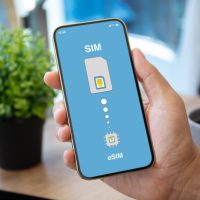
If your phone was made in the last few years, it likely supports an eSIM (embedded SIM).
This is entirely digital.
You can purchase a data plan while you’re still packing your suitcase, scan a QR code, and have it ready to activate the moment your plane touches the tarmac.
The flexibility here is unmatched.
You keep your home number active for emergency calls or two-factor authentication texts, while the eSIM handles all the heavy lifting for data.
It eliminates the panic of finding a store open at 6 AM after a red-eye flight.
Making the Right Choice
Choosing the right provider can be overwhelming because the market is flooded with apps and services.
It helps to look for expert comparisons rather than just picking the first ad you see on Google.
For a deep dive into the top options, you can check out the Best eSIMs for the UK in 2026 – Full Review | Cybernews.
As the biggest cybersecurity news outlet, Cybernews offers a level of scrutiny that helps filter out the unreliable services from the ones that actually keep you connected in the Scottish Highlands or the London Underground.
Staying connected shouldn’t be the highlight of your trip; it should be the invisible utility that lets you enjoy everything else.
Whether you go physical or digital, sorting this out before you fly saves you time for the important stuff, like finding the perfect pint.
Additional Resources
 Roaming vs. Local SIM vs. eSIM – Which Option Saves You the Most Money?
 Overlooked Dangers in Singapore Trip and Easy Ways to Stay Safe
 7 Ways to Stay Healthy When You Travel
 Safe and Fun Ways to Spend Time Online During Solo Travels
 Creative Ways to Document Your Travel Adventures
 Is It Safe to Use an eSIM App for Travel?












I was honestly surprised how much easier it was to just scan a QR code for an eSIM before landing instead of hunting for a SIM card at Heathrow.
I was glad I had my eSIM set up before landing because the Tube map loaded instantly without any frantic searches for Wi-Fi.
I tried the eSIM before landing and it was a total relief not having to scramble for a local SIM or worry about crazy roaming charges as soon as I landed at Heathrow.