


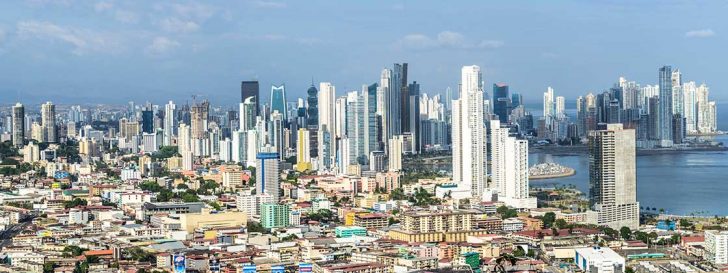
The allure of Panama City lies in its eclectic mix of historical and modern architecture.
Today, glass and steel skyscrapers look out over the same Pacific waters once navigated by the gold-laden galleons of the Spanish Empire.
It is also one of the only capital cities in the world to boast a primary rainforest within its city limits.
Situated at the mouth of the country’s famous canal, Panama City serves as a central hub for high-energy commerce.
Travelers enjoy the cobblestone charm of unique landscapes such as Casco Viejo, a UNESCO World Heritage site full of cobblestone streets, colonial structures, and rooftop bars.
Panama City is a striking fusion of the urban and the tropical, but is it safe for global travelers?
Warnings & Dangers in Panama City

OVERALL RISK: MEDIUM
Panama City is a safer choice than other well-traveled Latin American capitals. It does have a medium risk level, though, due to the high rates of petty crime. There are also neighborhoods within the city known for their gang activity. Tourists are rarely the targets of violent crime, but they can be attractive choices for opportunistic theft, especially in crowded tourist landmarks and markets. A little vigilance goes a long way when you visit Panama City.

TRANSPORT & TAXIS RISK: HIGH
As long as you use the licensed taxis, you will not encounter any problems. But bear in mind the fact that there have been reports of traveler being robbed and assaulted by taxi drivers. Taxis do not have a meter since fares are set by the authorities. During rush hour some buses can get crowded, but it is a safe means of transport in Panama City. If you decide to walk, pay attention when crossing the street since Panamanian drivers are aggressive, they do not slow down on a crosswalk.

PICKPOCKETS RISK: HIGH
The risk of getting pickpocketed in Panama City is one of the reasons for the medium threat level. It is the most prevalent threat to tourists. Thieves frequent common hotspots in the city, such as the Albrook Bus Terminal, Avenida Central, a popular shopping center, and the ruins of Panamá Viejo. They work in teams, with one creating a distraction while the other steals a wallet or a high-value phone.

NATURAL DISASTERS RISK: LOW
Panama lies south of the hurricane belt, making it a safer vacation spot than many other Caribbean options. The primary risk is heavy tropical rains that can lead to localized flooding and landslides. There are also occasionally small earthquakes, but significant damage from them is rare. The city is built to endure them safely.

MUGGING RISK: MEDIUM
Armed robberies are not as common in Panama City, but they do happen. There are also some incidents of people forcing victims to go to ATMs and withdraw cash. The risk increases after dark and in problem zones such as El Chorrillo or Curundu. It is better to stick to well-lit areas and take an Uber at night to reduce the risk.

TERRORISM RISK: LOW
Panama has historically been a neutral country in global conflicts. They focus much of the government security forces on protecting the Panama Canal. There are occasional heated protests or roadblocks. You should avoid these if you see them.

SCAMS RISK: MEDIUM
There are some local scams to watch for while visiting Panama City. For instance, some restaurants will add a tip, or propina, to the check without the guests' knowledge. Taxis can sometimes have broken meters, allowing them to charge more than they should. Travelers may encounter individuals posing as police or government officials who demand payment for providing unsolicited information or advice.

WOMEN TRAVELERS RISK: MEDIUM
Solo female travelers will find Panama City a mixed bag. They are generally safe if they stay in specific neighborhoods, including El Cangrejo or Casco Viejo. They may hear catcalling, though, anywhere in the city. They should avoid traveling alone at night and use reputable rideshare apps instead of hailing taxis on the street.

TAP WATER RISK: LOW
Panama City is one of the few Latin American cities that offers treated tap water that is safe to drink. If enjoying the more urban areas of the city, the water should be okay. If you're going to rural areas, though, it is better to take bottled water with you.
Safest Places to Visit in Panama City
Some of the safest areas in the city are the ones most travelers visit, such as Casco Viejo.
Landmarks like the Presidential Palace often have a heavy police presence at all hours of the day.
There are upscale neighborhoods like El Cangrejo and Obarrio that travelers visit for their trendy cafés and expats.
They offer well-lit sidewalks at night to reduce the risk.
The dedicated Amador Causeway, which is a zone dedicated to travelers, restricts cars and provides a specialized security detail for those who want to hike or bike.
This region also offers some of the best views of the city skyline and the canal.
Places to Avoid in Panama City
Most of Panama City is safe in many areas, but there are designated red zones that travelers should avoid.
El Chorrillo is close to the popular tourist area Casco Viejo, but remains a high-crime spot in the city.
The city has street-marked boundaries to advise travelers to stay out of this area.
The neighborhoods of Curundu and San Miguel are some of the most impoverished in the city and notorious for violent crime.
The highest crime rate in the country is in the district of San Miguelito.
It is okay to visit Avenida Central and Panamá Viejo during the day, but avoid them at night.
Safety Tips for Traveling to Panama City
- Use rideshare apps and avoid street taxis: Uber and InDrive are available in the city, and they provide a GPS record and a pre-negotiated price. The street taxis are famous for overcharging and ATM robberies.
- Don’t stand out: Put away the expensive watches, phones, and cameras when out in public. Carrying them around will make you a target. Situational awareness is essential any time you are traveling. Try not to look like a tourist or someone with items worth stealing.
- Keep digital copies of your important documents: You want to keep photos of your passport, visa entry stamp, and travel insurance on your phone and in the cloud. Leave the physical items at the hotel in a safe. Consider carrying a photocopy as a backup.
- Avoid street ATMs: Look for them in banks and major shopping malls, as opposed to on the street or in an outdoor kiosk. The inside ATMs are less likely to have skimming devices, a device someone can place over the card slot to read your information. Skimming devices can also include a pinhole camera that captures images of the card’s information. Both can be difficult to spot. On busy streets, criminals can install these devices in seconds without anyone noticing. This is harder to do inside a bank or store. Going inside can protect you from getting robbed while using the ATM.
- Stay Casco-bound at night: When enjoying the nightlife of Panama City, stay within the boundaries of Casco Viejo or El Cangrejo. If you must move between neighborhoods, go in a car. You should not try to walk after dark.
- Learn the basics in Spanish: You should know how to ask for help in Spanish and to get and understand directions. This will make you look less vulnerable and less like a tourist. It is also more respectful to the city’s residents to ask simple questions in their native language, such as where the bathrooms are.
- Be mindful of the heat: Panama City has intense humidity. It is easy to suffer heat exhaustion with no warning. Always carry water with you and wear sunscreen if you’re outdoors.
- Avoid protests: Panama City is politically active. It is best to stay out of these conflicts and just enjoy your visit. If you see a crowd up ahead or a roadblock, change direction.
- Double-check the bill: In most restaurants, they often include the tip on the check. If the server implies it is not, double-check to be sure. If you see “Servicio,” the tip is on the bill.
- Don’t fight back: If you do get mugged, don’t resist. Hand over whatever valuables you have without argument. You can replace a wallet or phone. If you fight back against someone trying to rob you, they may get violent. Travel insurance may replace whatever you lose, so it’s best to let them have it without an argument.
So... How Safe Is Panama City Really?
For those looking for safe traveler spots in Central America, Panama City is one of the safest options.
The violent crime rate is lower than that of neighboring countries, such as Honduras or Colombia.
The safety of Panama City is compartmentalized, though.
One street may feature a high-end shopping center with a strong police presence, while the next one sits in a high-risk neighborhood.
Travelers’ behavior can be a safety factor, too.
If you stick to the designated tourist-friendly areas and avoid the red zones, you can lower the risk of problems.
Casco Viejo, Amador Causeway, and the financial district are safer than San Miguel.
The most dangerous activity in the tourist areas is pickpocketing.
The Panamanian Ministry of Security states that the most violent incidents involve drug trafficking and gangs in Panama City.
They rarely involve tourists.
Express kidnappings, where they force the victim to withdraw money from an ATM, are a concern in some areas, though.
Travelers should remain aware of their surroundings and avoid designated red zones to protect their safety.
Panama City is a beautiful place to visit, and it is safe if you are smart while there.
How Does Panama City Compare?
| City | Safety Index |
|---|---|
 Panama City Panama City |
62 |
 Monroe Monroe | 32 |
| Red Wing | 78 |
 Dar es Salaam Dar es Salaam | 45 |
 The Hague The Hague | 90 |
 Puerto Vallarta Puerto Vallarta | 72 |
| St. Charles | 79 |
Useful Information

Visas
Most Western travelers will not need a visa to visit Panama City. They are typically granted 90 to 180-day tourism passes upon arrival. You will need a passport valid for at least 6 months from your date of entry. You will also need proof of onward travel—for instance, a return flight ticket. Panama frequently changes the entry duration for some nationalities, so check the current immigration rules to verify how long you can stay.

Currency
The currency in Panama is the Panamanian Balboa (PAB). It consists of paper US Dollar (USD) and Balboa coins. That makes traveling there easier for those coming from the US. The country makes its own coins, but they are the same size and value as US coins. So, a dime-sized Balboa is worth 10 cents. They do not make their own paper bills, which is why travelers use USD. There is no need to exchange money if you travel in USD. Be sure to carry small bills, under $10 preferably, for rides and local markets.

Weather
Panama enjoys a tropical climate. It is hot and humid most of the time there, with average temperatures around 80 to 90 degrees Fahrenheit (20 to 32 degrees Celsius). The dry season runs from December to April. You’ll want to travel with lightweight clothing and a sturdy umbrella or light raincoat any time of the year, though. Tropical rain showers can occur with no notice.

Airports
The main travel gateway in Panama City is the Tocumen International Airport (PTY). It is about 20km from the city center. From there, you can reach the city by metro, registered taxi, or Uber. The metro is the most cost-effective option, but it can be a struggle with luggage. Travelers must first take a shuttle from the airport to the ITSE/Corredor Sur station and then transfer to the main line. You’ll pay more for a cab than you would for Uber if you do choose to get a ride to your hotel. Albrook (PAC) is a local airport that handles domestic flights, and Panama Pacifico is known for low-cost regional carriers.

Travel Insurance
Book travel insurance that covers medical emergencies and theft. Panama City has excellent private hospitals, such as Punta Pacifica, which is associated with Johns Hopkins. However, they are expensive. The policy you choose should also cover medical evacuation and the theft of electronics, such as laptops and smartphones.
Panama City Weather Averages (Temperatures)
Average High/Low Temperature
| Temperature / Month | Jan | Feb | Mar | Apr | May | Jun | Jul | Aug | Sep | Oct | Nov | Dec |
|---|---|---|---|---|---|---|---|---|---|---|---|---|
| High °C |
29 | 29 | 30 | 31 | 31 | 30 | 30 | 30 | 31 | 30 | 29 | 29 |
| Low °C |
24 | 24 | 24 | 25 | 24 | 24 | 24 | 24 | 24 | 24 | 24 | 25 |
| High °F |
84 | 84 | 86 | 88 | 88 | 86 | 86 | 86 | 88 | 86 | 84 | 84 |
| Low °F |
75 | 75 | 75 | 77 | 75 | 75 | 75 | 75 | 75 | 75 | 75 | 77 |
Panama - Safety by City
| City | Safety Index |
|---|---|
| Panama City | 62 |







Very safe city, you would have to go out of your way to be in danger
Extremely safe city. Been there a couple times to visit local friends. I’ve walked around casually in various neighborhoods like San Francisco to grab food at various times of day. I feel safer here than I do back in the states. There are low income neighborhoods prople know are “the hood”, and as long as you stay out of those areas at night, you are fine. You would be safe going into those neighborhoods im the day time. At night we took shortcuts through poor and mostly black neighborhoods near casco viejo. And guess what? We were fine, the locals are just hanging out and minding their own business.
Be cautious and you'll have no issues
Having been to Panama 3 times in the last two years, I think it is a lovely place to visit. I know there are risks here but this is the case for places all over the world. Unless my home country warns not to travel someone I feel it is safe to assume the likelihood of something bad happening is rare.
Gets a bad rep, perhaps unfairly
While I had no issues during my trip, a few family members who went along with my wife and I were uneasy for a large portion of the trip. This was mainly due to them seeing something on social media about a woman being abducted in the area we were in days prior. Nothing bad happened to any of us, well aside from a bit of a stomach issue. Not down to the food itself, but a few of us have some weak stomachs.
Be Smart
I’ve been to Panama 5 times in the last 3 years and was there once for 6 months. I’ travelled all over this planet and it is the safest place i’ve been. It is safer than USA. Every time i go i carry large amounts of cash seemingly at all times and i’ve never felt threatened or in danger. Just be smart. Don’t put yourself in high risk stuations. This applies to not only Panama but any country in the world. If you are not vigilant about your safety you can end up a victim. But the chances of it happening in Panama are far less than it happening to you in the USA.
Lovely and safe country
I visired Panama first time 1996. After about 15 visits I still love the country and feel safe. The best is that the development is to right direction. What ever western country you compare they have a good life quality here. When you avoid the often named parts of the city in the evening everything is excellent. But, the traffic is not nice and seems that the fars are missing the breaks and they never show if they go to left or right. But people are lovely and help the tourists get maximum. Taxis are good, pay with cash or use Bolt or Uber.
Strolling through Casco Viejo with a drink in hand while the sun sets behind those stunning colonial buildings felt like stepping into a postcard, even if I did get caught in a sudden downpour!
Stumbling through Casco Viejo was like walking through a colorful postcard, where the old buildings felt alive with stories, but I couldn’t help feeling a mix of excitement and caution about the safety aspect.
Just got back from Panama City and honestly, the contrast between those shiny skyscrapers and the old colonial buildings blew my mind, plus the vibe in Casco Viejo is so chill with its colorful streets and rooftop bars that I could’ve spent all day just soaking it in.
I never expected to find a rainforest right in the city, but wandering through Panama definitely felt like stepping into a hidden treasure between those towering skyscrapers!