Some places in the world do not need much explanation.
You arrive, you look around, and for a moment, your brain goes quiet.
Ancient Egypt is full of places like that.
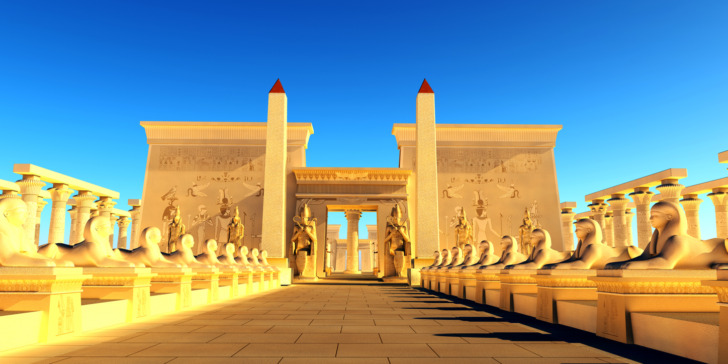
A temple rising out of the desert.
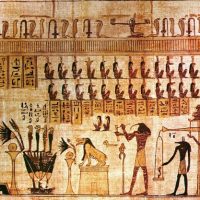
A tomb wall covered in careful carvings.
A stone column so large it makes you feel tiny in the best possible way.
These are not just old buildings.
They are places that still carry weight.
They make you pause.
They make you wonder how people, thousands of years ago, could create something so precise, so beautiful, and so lasting.
And maybe that is the real magic of ancient Egyptian buildings.
It was never only about stacking stones.
It was about purpose.
It was about memory.
It was about reaching toward something bigger than daily life and leaving behind proof that human hands can do astonishing things when they are guided by vision, patience, and belief.
So how did ancient Egyptian builders create places that still leave us speechless today?
The answer is part engineering, part art, part faith, and part sheer human determination.
Building Was Never Just About Stone
To understand ancient Egyptian architecture, it helps to forget the idea that these structures were simply “buildings.”
That word feels too small.
For ancient Egyptians, architecture was deeply tied to how they understood life, death, power, and the universe.
A temple was not just a place to gather.
It was a home for the gods.
A tomb was not just a burial site.
It was a carefully prepared space for the afterlife.
A monument was not just a display of strength.
It was a message to the future.
That is why so much of ancient Egyptian building feels so intense.
The builders were not working for a quick result.
They were creating spaces meant to last beyond one lifetime, beyond one ruler, beyond one generation.
Think about that for a second.
Most things we build today are expected to change, update, or disappear.
A website gets redesigned.
A house gets renovated.
A shopping center gets torn down.
But ancient Egyptian builders were working with a different mindset.
They were building forever, or at least as close to forever as humans could imagine.
That sense of permanence shaped everything.
The materials.
The scale.
The symbols carved into the walls.
The alignment of buildings with the sun, the river, and the stars.
Every choice carried meaning.
The stone mattered, yes.
But the reason behind the stone mattered more.
The Genius Was in the Planning
It is easy to look at ancient Egyptian monuments and focus only on the final result.
The size.
The beauty.
The mystery.
But behind all of it was planning.
Careful, practical, deeply organized planning.
These builders did not have cranes, trucks, computer models, or modern surveying tools.
They had simple instruments, strong knowledge, skilled hands, and a system that allowed thousands of people to work toward the same goal.
That alone is impressive.
Before a structure could rise, someone had to choose the site.
Someone had to measure the land.
Someone had to think about the direction of the sun, the stability of the ground, the movement of materials, and the meaning of the location.
Stone had to be quarried, shaped, moved, lifted, and placed.
Workers had to be fed.
Teams had to be organized.
Craftsmen had to coordinate with overseers, architects, and religious officials.
Nothing about that was casual.
And yet, the best ancient Egyptian structures do not feel messy or improvised.
They feel calm.
Balanced.
Intentional.
That tells us something important about the people who built them.
They were not just strong laborers.
They were problem solvers.
They understood measurement.
They understood pressure and balance.
They understood how to work with stone at a scale that still feels hard to fully grasp.
They also understood that a great structure begins long before anyone sees it rising from the ground.
It begins in the mind.
That is one reason these places still impress us.
They remind us that ancient people were not “simple” people.
They were observant, disciplined, and incredibly capable.
Their tools may have been basic by modern standards, but their thinking was anything but basic.
Scale Was Part of the Message
One of the first things people notice about ancient Egyptian monuments is their size.
They are big.
Not just large in a technical sense, but emotionally large.
They make you feel their presence before you understand their details.
You do not need to know the exact measurements of a temple wall or a stone block to feel the impact.
Your body understands it immediately.
That was not an accident.
Scale was part of the experience.
Ancient Egyptian builders knew that size could create awe.
A towering column, a long avenue, a massive statue, or a stone gateway could make a visitor feel small, humbled, and alert.
It changed the way people moved through space.
It changed how they looked up, how they slowed down, how they felt.
When travelers stand before temples, tombs, or the Giza Pyramids, the first reaction is often silence, because the scale makes the explanation feel smaller than the experience itself.
And isn’t that still true today?
You can read about ancient Egypt for years.
You can look at photos, watch documentaries, and study diagrams.
But standing in front of one of these places is different.
The body reacts before the mind catches up.
You feel the heat, the light, the dust, the open space.
You see the stone rising against the sky.
Suddenly, history is not a subject.
It is right there in front of you.
That is the power of scale.
It turns knowledge into feeling.
Craftsmanship Made the Stone Feel Alive
Of course, ancient Egyptian architecture was not impressive only because it was huge.
Size can amaze people for a moment, but detail is what keeps them looking.
That is where the craftsmanship comes in.
Walk through an ancient Egyptian temple or tomb, and you start to see how much care went into the surfaces.
Walls were carved with scenes of offerings, ceremonies, daily life, gods, kings, animals, boats, and symbols.
Hieroglyphs were not random decoration.
They carried names, prayers, stories, and ideas.
Every image had a role to play.
The buildings spoke.
That may sound dramatic, but it is true.
These walls were designed to communicate across time.
They told people who built the place, who were honored there, what rituals mattered, and how the ancient Egyptians understood the world.
What makes this even more moving is the human effort behind it.
Every carved line came from a hand.
Every painted figure came from someone standing close to the wall, working with focus and skill.
Every smooth surface took patience.
Every detail required time.
It is easy to talk about ancient Egypt in terms of kings and dynasties, but these monuments also hold the presence of workers, artists, stonecutters, painters, and planners whose names we may never know.
That makes the experience more personal.
You are not just looking at royal ambition.
You are looking at human labor.
Human imagination.
Human pride.
The little details remind us that these places were made by real people with tired arms, trained eyes, and probably plenty of ordinary frustrations along the way.
That is part of what makes them beautiful.
They Built With the Landscape, Not Apart From It
Ancient Egyptian builders also had a powerful sense of place.
Their monuments do not feel randomly dropped into the landscape.
They feel connected to it.
The Nile, the desert, the sun, and the horizon all shaped how ancient Egyptian structures were built and experienced.
The river supported life, travel, farming, and the movement of materials.
The desert offered stone, space, and preservation.
The sunlight gave buildings drama and meaning.
The horizon became part of the spiritual imagination.
In many ancient Egyptian sites, you can feel this relationship between architecture and nature.
The building is not fighting the landscape.
It is working with it.
A temple might be positioned so that the light enters in a meaningful way.
A tomb might be placed in a desert valley where the dry climate helps protect it.
A monument might sit where the open sky becomes part of the experience.
These choices were practical, but they were also emotional and symbolic.
The builders understood that a place is never only the structure itself.
It is also the air around it.
The path leading to it.
The light that touches it at different times of day.
The silence that gathers there.
That is something modern builders and travelers can still learn from.
A powerful place does not need to be crowded with distractions.
Sometimes, what makes it unforgettable is the way it lets the world around it speak too.
Their Work Took Patience. We Rarely Practice Now
There is another reason ancient Egyptian buildings leave such a strong impression.
They come from a world that moved differently.
Today, we are used to speed.
Fast updates.
Fast travel.
Fast communication.
Fast results. We often expect progress to be visible right away, and when it is not, we start to feel behind.
Ancient Egyptian monuments challenge that mindset.
These places took years, sometimes decades, to complete.
They required repeated effort over long periods of time.
They demanded planning, patience, correction, and commitment.
Nobody involved could see the entire story from beginning to end in the way we look back on it now.
And still, they built.
That kind of patience feels almost radical today.
It reminds us that meaningful work often takes longer than we want it to take.
It asks more from us than talent. It asks for endurance.
What would happen if we thought about our own work that way?
Not every project needs to last thousands of years, of course.
Most of us are not building temples in the desert.
But the lesson still applies.
Good work needs intention.
It needs care.
It needs people who are willing to think beyond the quick win.
Ancient Egyptian builders understood that a legacy is not created by rushing.
It is created by returning to the work again and again, even when the finish line is far away.
That is a simple idea.
But it matters.
Beauty and Function Worked Together
One thing that makes ancient Egyptian structures so memorable is the way beauty and function often meet in the same space.
A column was not just holding up stone.
It might also be shaped like a lotus or papyrus plant, connecting the building to ideas of creation and life.
A wall was not just marking a boundary.
It could carry sacred images and written language.
A doorway was not just an entrance.
It could create a sense of transition from the ordinary world into a more sacred one.
The practical and the symbolic were woven together.
That is why these places feel so rich.
They were built to work, but also to mean something.
They guided movement, created shade, supported weight, protected sacred spaces, and told stories at the same time.
Modern design often separates those things.
We ask if something is useful or beautiful, efficient or meaningful.
Ancient Egyptian architecture reminds us that those ideas do not have to compete.
A place can serve a purpose and still stir emotion.
Actually, the emotion may be part of the purpose.
A temple that made people feel awe was doing its job.
A tomb that created a sense of protection and continuity was doing its job.
A monument that carried a ruler’s name into the future was doing its job.
The builders knew that people do not experience spaces only with their minds.
They experience them with their senses, memories, fears, hopes, and beliefs.
That is still true.
The Mystery Keeps Us Looking
Even with all we know about ancient Egypt, these places still hold mystery.
Not because ancient Egyptians were magical or unknowable, but because the distance between their world and ours is so large.
We can study their tools.
We can read many of their inscriptions.
We can examine construction methods, labor systems, and materials.
But there will always be moments when we stand in front of their work and feel the gap.
How did it feel to build this?
What did the workers talk about at the end of the day?
Did they know they were making something that people would travel across the world to see thousands of years later?
We can make educated guesses.
We can learn a lot.
But we cannot fully enter their world.
That mystery is part of the pull.
It keeps the monuments from becoming flat facts.
It leaves room for wonder.
And wonder is important, because it reminds us that history is not only about answers.
Sometimes it is also about better questions.
Ancient Egyptian builders gave us structures that can be measured, photographed, mapped, and studied.
But they also gave us places that make people feel something beyond information.
That is rare.
What We Can Learn From Them Today
The achievements of ancient Egyptian builders are often discussed as technical wonders, and they are.
But their deeper lesson may be more human.
They show us what happens when people build with purpose.
They show us that beauty can last when it is tied to meaning.
They show us that details matter because details are often where emotion lives.
They show us that big visions require many hands, not just one famous name.
They also remind us that the things we create say something about what we value.
That can feel a little uncomfortable, but in a useful way.
What are we building now?
What are we rushing through?
What are we making that someone might still care about later?
Most of us are not carving stone or raising monuments under the Egyptian sun.
But we are all building something.
A body of work.
A family rhythm.
A classroom.
A business.
A creative practice.
A community.
A way of being remembered.
Ancient Egyptian builders remind us to bring more care to that work.
Not perfection.
Care.
There is a difference.
Perfection can make work stiff and lifeless.
Care makes it honest.
Care says, “This matters, so I will give it my attention.”
That attitude is visible in the best ancient Egyptian structures.
It is in the alignment, the carvings, the scale, the symbolism, and the way these places still hold attention after so much time has passed.
Why They Still Leave Us Speechless
So why do ancient Egyptian buildings still affect us so deeply?
It is not just because they are old.
Plenty of old things do not move us in the same way.
It is not just because they are large, either.
Size alone can impress, but it does not always touch the heart.
These places leave us speechless because they combine so many human desires at once.
The desire to honor.
The desire to understand death.
The desire to create beauty.
The desire to be remembered.
The desire to reach beyond the limits of one ordinary life.
That is why they still feel alive.
They remind us that people thousands of years ago looked at the same sun, feared loss, loved beauty, respected power, and wondered what came next.
Their world was different from ours in countless ways, but the emotional thread is still recognizable.
Standing before their work, we do not only see ancient Egypt.
We see ourselves.
We see what humans can do when imagination and discipline meet.
We see how much effort people will give to something they believe matters.
We see that stone, when shaped with enough purpose, can carry feelings across centuries.
That is the quiet miracle of it.
The Long Memory of Human Hands
Ancient Egyptian builders created more than monuments.
They created experiences that still unfold slowly, even now.
You walk closer.
You notice the size first.
Then the details.
Then the setting.
Then the silence.
Then, maybe, the strange feeling that time is not as simple as you thought.
These places do not shout.
They do not need to.
They wait.
And when we arrive, they remind us that human beings have always wanted to make meaning out of the materials around them.
Stone, sunlight, river mud, color, shadow, language, labor.
In the hands of ancient Egyptian builders, those materials became places that still ask us to pause.
Maybe that is why their work continues to speak so clearly.
Not because we understand every detail.
Not because every mystery has been solved.
But because the care is still visible.
The hands are gone.
The wonder remains.