


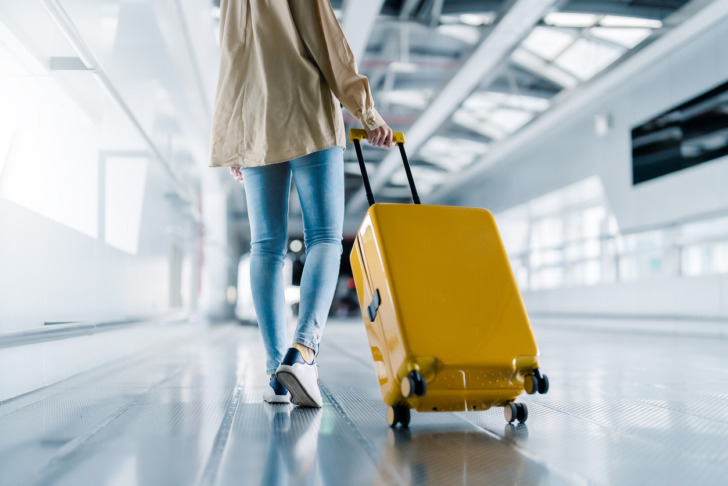
Solo travel has a lot of downtime in it.
More than people expect.
You picture the adventures and mentally skip past the three hours sitting in an airport in Lisbon because your connection was delayed, and there’s nothing to do except watch a man eat a very large sandwich.
Your phone gets you through those hours.
How prepared it is makes an enormous difference – and not just for entertainment.
Public Wi-Fi, the kind you’ll use without thinking in airports and hotel lobbies, is where most digital problems on trips begin.
Not dramatic hacking-movie problems, usually.
Quieter ones: an account accessed, details intercepted on a network you had no reason to trust.
This covers both: what to load on your phone before you leave, and how not to undo it by connecting to something dodgy in a transit lounge.
The Solo Traveler’s Digital Toolkit
Download offline maps before you fly.
Google Maps lets you save entire regions; Maps.me is worth having as a backup.
The moment your data runs out, or your SIM stops working in a new country, is the exact moment you’ll need navigation, so having it available offline isn’t optional.
Google Translate’s offline language packs are free and surprisingly good.
Download the languages for the countries you’re visiting.
Being able to translate a menu or a sign without a data connection sounds minor until the moment you actually need it.
For streaming, download content before you go. Spotify, Netflix, and most platforms worth using support offline playback.
A long-haul flight or overnight train is a meaningful chunk of listening and watching time.
Arriving with nothing downloaded is a choice you’ll regret around hour three.
Staying Secure on Public Wi-Fi
This is the part most solo travelers skip, and probably shouldn’t.
Free airport Wi-Fi is a public network.
Anyone else on it can, with the right tools and minimal effort, see what you’re doing.
That includes logging into things.
That includes entering payment details.
The UK’s National Cyber Security Centre is fairly direct about this: sensitive activity belongs on a connection you control.
In practice, that means a VPN or your phone’s personal hotspot.
A VPN encrypts your traffic so that even on a compromised network, what you’re doing isn’t readable.
A hotspot cuts out the public network entirely.
Quick security tips – worth doing before you leave, not in the departure lounge:
- Get a VPN installed at home. NordVPN, ExpressVPN, and Mullvad all have solid reputations.
- Turn on two-factor authentication for email and any account with payment details attached.
- Update your operating system and apps before you go. Mid-trip updates are a nuisance you don’t need.
- Switch off the automatic Wi-Fi connection in your settings. Your phone silently joining a network called “Free_Airport_WiFi” is not in your interest.
- Even with a VPN running, avoid anything financial on public Wi-Fi if you can wait ten minutes until you’re somewhere better.
This data protection checklist for travelers is worth going through before you pack.
Diversifying Your Entertainment
Streaming only carries you so far.
There are specific kinds of trip boredom – the 11 pm hotel room kind, the two-hour layover kind – where something more interactive works better than another episode of something you’re only half-watching.
Mobile gaming has gotten genuinely good.
Gaming platforms field various online casino games built for exactly this context: short sessions, low data use, something that actually holds your attention rather than just occupying the screen.
They suit the fragmented time of travel better than most people expect.
The same rule applies everywhere else: use a secure connection, not the hotel lobby Wi-Fi.
Before You Go
Set your phone up properly before you travel, and most of this takes care of itself.
Offline content downloaded, VPN ready, two-factor authentication on, automatic Wi-Fi off.
An hour of prep, once, before you leave.
Last thing: pack a portable power bank in your carry-on.
All of the above is useless if the battery dies on hour five of a long journey.
They always die on the long ones.
Additional Resources
 Travel Abroad Safely: Practical Digital Security Tips For Confident Trips
 Digital Security Checklist: How to Protect Your Data While Traveling
 Planning Your Trip Abroad? Here’s What You Should Know
 Is It Safe to Gamble Online While Traveling Abroad? What Tourists Should Know
 Planning a Bali Trip? Don’t Forget Your International Trip Insurance
 Safe and Fun Ways to Spend Time Online During Solo Travels











