


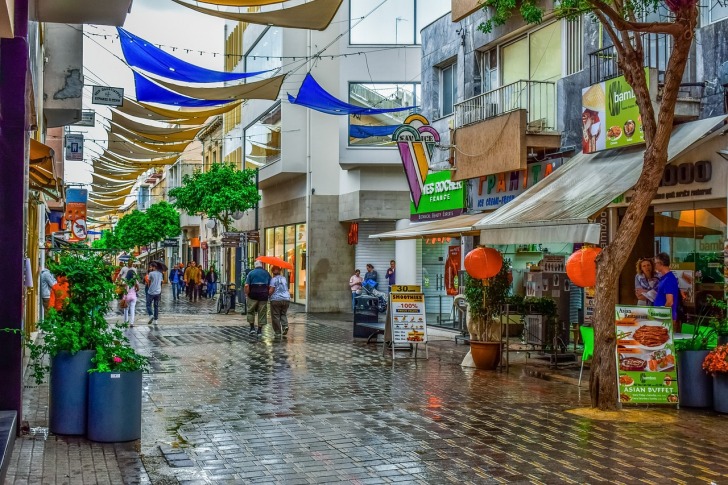
Nicosia does not feel like a typical capital city at first glance.
It is the divided capital of Cyprus, sitting inland near the center of the island, with Venetian walls, lively cafe streets, and a real-world border running through the heart of town.
That alone makes it one of the most unusual cities in Europe.
From a traveler’s point of view, Nicosia is usually more about history, museums, food, and street life than beaches or resort living.
The good news is that everyday crime risk in the city is generally fairly low, especially compared with many larger European capitals.
The bigger safety story right now is not street crime.
It is the wider regional security picture around Cyprus, plus the practical complications that come with the island’s division and crossing points.
For most visitors who stay alert, use legal entry routes, and avoid careless late-night decisions, Nicosia is a manageable and rewarding destination.
Warnings & Dangers in Nicosia

OVERALL RISK: MEDIUM
Nicosia itself is usually fairly safe for travelers in day-to-day terms, with relatively low levels of serious crime aimed at tourists. I would not put it in the high-risk category for normal sightseeing. Still, Cyprus is currently under elevated travel advisories because of regional tensions, the threat of armed conflict spillover, and the island’s political division, so the overall risk lands closer to medium than low right now.

TRANSPORT & TAXIS RISK: LOW
Transport risk in Nicosia is generally low. Roads are decent, airport shuttles are straightforward, and licensed taxis are the easiest option once you reach the capital. The bigger issue is not criminal danger but logistics, such as using the correct legal airport entry points and keeping an eye on possible disruptions linked to the regional security climate. Pre-booking reputable transport is still the smart move.

PICKPOCKETS RISK: MEDIUM
Pickpocketing is not the first thing most people associate with Nicosia, but petty theft does happen in urban and tourist areas across Cyprus. In the old city, crowded cafes, busy shopping streets, bus stops, and festivals are the places where you should keep your guard up. I would not be paranoid here, but I would not leave a phone on a table edge or carry a backpack carelessly in a crowd either.

NATURAL DISASTERS RISK: MEDIUM
The biggest natural hazard in Cyprus is earthquakes, not hurricanes or major flooding. Damaging quakes are not an everyday event, but the hazard is real enough that it should be taken seriously. Summer heat is also a practical issue in Nicosia, especially because the city is inland and hotter than the coast. Heat exhaustion and dehydration can be more relevant to travelers than dramatic disaster scenarios.

MUGGING RISK: LOW
Violent robbery is not a major defining risk for most visitors to Nicosia. Serious violence can occur in Cyprus, but for tourists, routine mugging risk is still relatively low compared with many other capitals. The more realistic concern is being careless late at night in quiet areas, especially after drinking. Walking with confidence, using taxis after midnight, and avoiding deserted stretches keeps the risk comfortably lower.

TERRORISM RISK: MEDIUM
There is no reason to assume Nicosia is a constant terror hotspot, but official advisories do say terrorism remains a possible threat in Cyprus. Add the regional volatility and the island’s strategic location, and this risk cannot honestly be labeled low at the moment. Most travelers will never encounter a problem, but staying aware in crowded areas, near official buildings, and during periods of regional tension is wise.

SCAMS RISK: LOW
Nicosia is not notorious for aggressive tourist scams. Most issues are the usual travel annoyances: overcharging, questionable souvenir pricing, distractions in busy areas, or taxi misunderstandings if you do not confirm terms. I would rate scams as low overall, though that does not mean zero. A traveler who uses licensed taxis, ignores random offers, and pays attention in crowded areas should avoid most trouble.

WOMEN TRAVELERS RISK: LOW
Women can usually travel in Nicosia with relatively low risk, especially in central areas during the day and evening. Normal city precautions still apply, particularly with nightlife, drink safety, and quiet streets after dark. I would feel comfortable recommending Nicosia to solo women travelers, but not with the message that no caution is needed. Use trusted transport at night and avoid isolated walks after heavy drinking.

TAP WATER RISK: LOW
Tap water in Cyprus is officially considered safe to drink, and the public health monitoring standards are good. The reason many travelers still switch to bottled water is not safety panic but taste and hardness. In Nicosia, you can generally drink tap water without major concern, though some visitors prefer bottled water for comfort, especially during hot weather when they are drinking more of it.
Safest Places to Visit in Nicosia
Ledra Street and the Central Old Town
If you want the easiest, most comfortable part of Nicosia for first-time exploring, start here.
Ledra Street and the surrounding lanes are lively, walkable, and full of cafes, shops, and people for most of the day.
Busy areas like this usually feel safer because you are not isolated, and there is a constant mix of locals, students, and visitors.
It is also the easiest place to get oriented if you want to see the city without overcomplicating logistics.
Laiki Geitonia
Laiki Geitonia is one of the prettiest and most visitor-friendly pockets of the old city.
Its restored traditional houses, pedestrian lanes, and relaxed atmosphere make it a good choice for travelers who want charm without feeling cut off.
I like places like this because they allow you to sightsee at a slow pace.
That usually leads to smarter travel decisions, fewer transport mistakes, and less wandering into dim backstreets without realizing it.
Museum District and Civic Core
The Cyprus Museum and the broader civic center area are among the safest bets for daytime sightseeing.
These are straightforward places to visit, with broad roads, recognizable institutions, and a more orderly feel than some maze-like stretches of the old city.
If you enjoy archaeology, history, or simply moving through a city where landmarks are easy to spot, this is a very comfortable zone.
Well-Frequented Crossing Areas
The crossing points around central Nicosia, especially the pedestrian route near Ledra Street, are often part of the visitor experience.
These areas are generally routine and manageable when used properly with documents in hand and a bit of patience.
They feel safest during normal daytime hours, when traffic is steady and everything is functioning in a predictable way.
Places to Avoid in Nicosia
Quiet Edges of the Buffer Zone After Dark
This is the area I would highlight most clearly.
The Green Line is historically fascinating, but not every stretch around it is a place to linger late at night.
Near certain crossing-adjacent areas, the atmosphere can shift quickly from busy and interesting to quiet and oddly empty.
During the day, it is part of the city’s unique identity.
After dark, some stretches are simply not worth exploring casually.
Deserted Alleys Off the Old City Core
The old city is charming, but not every lane is equally lively.
Step a few streets away from the busy dining and shopping areas, and some parts become dim, quiet, and harder to read.
These are not necessarily crime-heavy zones, but they are the kinds of places where travelers lose bearings, especially after dinner or drinks.
I would avoid unnecessary wandering in empty alleys at night.
Isolated Parking Areas and Late-Night Transit Spots
Wherever people are distracted, tired, or loading bags, risk goes up a bit.
In Nicosia, that means isolated parking lots, poorly lit side streets near nightlife, and transport pickup points that are quiet after midnight.
These spots are less about some famous dangerous neighborhood and more about timing and vulnerability.
A taxi ordered to the door is often the better choice.
Illegal or Confusing Entry Routes
This is not a neighborhood, but it is absolutely a place to avoid in a practical sense.
Do not create problems for yourself by entering or exiting Cyprus through routes the Republic of Cyprus considers illegal.
That can lead to complications, fines, refusal of entry, or future travel headaches.
Safety Tips for Traveling to Nicosia
- Use legal entry points only. Nicosia is not a city where you should improvise your arrival plan. Enter and leave Cyprus through recognized ports such as Larnaca or Paphos airports. This is one of those destinations where entry rules matter more than usual because of the island’s division.
- Keep your passport on you when crossing areas near the Green Line. If you plan to cross between sides of the city, carry the right travel documents and be ready for checks. The process is usually routine, but forgetting documents can turn a simple walk into a frustrating detour.
- Stay in central, well-reviewed accommodation. For most travelers, the safest base is somewhere central and active, ideally near the old city core or another busy district. A hotel in a lively area means easier walking, easier taxi pickups, and less chance of ending up on a dark street wondering where you are.
- Be more cautious at night than during the day. Nicosia feels much easier in daylight. At night, especially after midnight, some parts of the city empty out fast. That does not automatically mean danger, but it does mean your margin for error gets smaller.
- Treat heat as a real safety issue. Nicosia can get intensely hot in summer, and inland heat sneaks up on people. Carry water, wear a hat, and avoid packing too much into the hottest hours. Many tourists prepare for crime and completely underestimate dehydration.
- Use licensed taxis or arranged transport after dark. This is not because taxis are the only safe way to move around, but because they reduce a lot of small risks at once. You spend less time getting lost, standing alone, or wandering through quiet streets.
- Guard your phone and wallet in busy pedestrian areas. Petty theft is not rampant, but crowded streets are still crowded streets. Keep bags zipped, avoid back pockets, and do not leave valuables on cafe tables while taking photos or checking maps.
- Do not overdo nightlife judgment. A lot of travel problems begin with one too many drinks and a bad decision afterward. Watch your drink, leave with the people you came with, and skip the heroic late-night solo walk home through unfamiliar streets.
- Monitor regional news before and during your trip. Because official advisories for Cyprus are currently elevated by regional security concerns, it makes sense to check for disruptions, airspace issues, or embassy updates before travel days. Most trips go smoothly, but awareness matters here.
- Buy travel insurance that actually covers disruption and medical needs. This is one of those destinations where insurance is not just a box to tick. Between flight changes, possible disruption, heat-related illness, and the usual unexpected issues, good coverage can save real money and a lot of stress.
So... How Safe Is Nicosia Really?
Nicosia is safer than many travelers probably expect, but more complicated than it first appears.
If you are judging only by street crime, the city comes off fairly well.
Crime against tourists is not especially common compared with many larger capitals, though petty theft and drink spiking do occur from time to time.
That matches the general feel many visitors get on the ground: cautious but not tense.
What changes the equation is the broader context.
Cyprus has been under elevated travel advisories because of the threat of armed conflict spillover, regional instability, and the special complications tied to the island’s division.
So the city is not unsafe in the usual tourist sense, but it does sit inside a more sensitive geopolitical environment than the average European capital.
My honest take is this: Nicosia is a good destination for travelers who pay attention.
Come for the history, culture, and uniqueness.
Just do not treat it like a carefree beach resort city where logistics and current affairs do not matter.
If you use legal entry points, stay in central areas, avoid wandering near quiet border-adjacent zones after dark, and keep basic urban awareness, the city is very manageable for most travelers.
How Does Nicosia Compare?
| City | Safety Index |
|---|---|
 Nicosia Nicosia |
71 |
| Larnaca |
82 |
| Ayia Napa |
73 |
| Limassol |
69 |
 Knoxville Knoxville | 57 |
 Aberdeen Aberdeen | 63 |
 Ordino Ordino | 94 |
| Leavenworth | 48 |
 Wiesbaden Wiesbaden | 57 |
 Male Male | 72 |
Useful Information

Visas
For many tourists, short stays of up to 90 days do not require a visa, but nationality rules vary, so check before departure. Cyprus also has its own entry framework, and using the wrong entry point can create legal complications. If you do need a short-stay visa, apply through a Cypriot embassy or consulate well before travel.

Currency
The currency in the Republic of Cyprus is the euro. For most travelers, the easiest option is to withdraw cash from bank ATMs and use cards for everyday spending rather than exchanging large amounts at airport counters. Keep a little cash for taxis, small shops, or markets, but card acceptance is generally good in urban areas.

Weather
Nicosia is hotter than coastal Cyprus, especially in summer. August is typically the hottest month, while winter is milder and more comfortable for walking. Pack light clothing for warm months, but do not forget sun protection. In cooler months, layers are enough for most travelers, especially evenings.

Airports
Nicosia does not have an operating civilian airport, so most travelers arrive through Larnaca International Airport, with Paphos as another option. Larnaca is the more practical choice for the capital. Shuttle buses and intercity buses connect the airport to Nicosia, and taxis are widely used for the final stretch into the city.

Travel Insurance
Travel insurance is a very good idea for Nicosia. Choose a policy that covers medical care, theft, cancellations, and travel disruption. Given the current regional security environment, read the policy wording carefully so you understand what is and is not covered if flights or plans change unexpectedly.
Nicosia Weather Averages (Temperatures)
Average High/Low Temperature
| Temperature / Month | Jan | Feb | Mar | Apr | May | Jun | Jul | Aug | Sep | Oct | Nov | Dec |
|---|---|---|---|---|---|---|---|---|---|---|---|---|
| High °C |
15 | 16 | 19 | 23 | 28 | 33 | 36 | 36 | 33 | 28 | 22 | 17 |
| Low °C |
6 | 6 | 8 | 11 | 15 | 19 | 22 | 22 | 19 | 15 | 11 | 8 |
| High °F |
59 | 61 | 66 | 73 | 82 | 91 | 97 | 97 | 91 | 82 | 72 | 63 |
| Low °F |
43 | 43 | 46 | 52 | 59 | 66 | 72 | 72 | 66 | 59 | 52 | 46 |
Cyprus - Safety by City
| City | Safety Index |
|---|---|
| Ayia Napa | 73 |
| Larnaca | 82 |
| Limassol | 69 |
| Nicosia | 71 |











I have been to many different places in Cyprus but Nicosia is something different. I feel like there is more life, culture, and experiences to be had here than in other areas I have been to. While it is a tourist spot, it doesn’t feel like it as much as other areas. I would love to go back if possible someday. I don’t get to travel but every few years and COVID really messed things up for a lot of travelers.
Bring insect repellents
Bring insect repellents, found myself getting too many mosquito bites! Visit the museums as there are many to see, then at night enjoy a couple of drinks and let loose! Get it together with some Greek syle BBQ and you have yourself a good night out.
Overall, it was a nice stay
Nicosia has a lot of nice places to visit. I recommend the Machairas Monastery, A.G. Leventis Gallery, Pivo microbrewery, Leventis Municipal Museum of Nicosia and their Observatory. All great places to visit!
Carlos s
Nicosia is the best city in the world. I visited Nicosia 20 years ago , and since then every year i am back ( except last year due to covid restrictions). Visit the walls and the old city , the museums, i even went to a football match in gasidi stadium, the omonia stadium. I hope one day i will move to Nicosia permanently. I feel very safe to walk there and do thinks and i wish my babies to live there one day.
It’s fascinating how Nicosia feels like two worlds in one, each side echoing its own history and culture while being so close together.
Passing through the Ledra Street checkpoint last week and then sipping a bitter coffee by the old Venetian walls left me oddly hopeful and a bit uneasy about how everyday life just keeps going in two halves of one city.
Sipping coffee on a busy cafe street and spotting the border line painted across the pavement made me grin; that little passport booth felt oddly mundane and kind of thrilling.
Walked the Venetian walls at sunset and felt unexpectedly calm even with the border running right through town.