


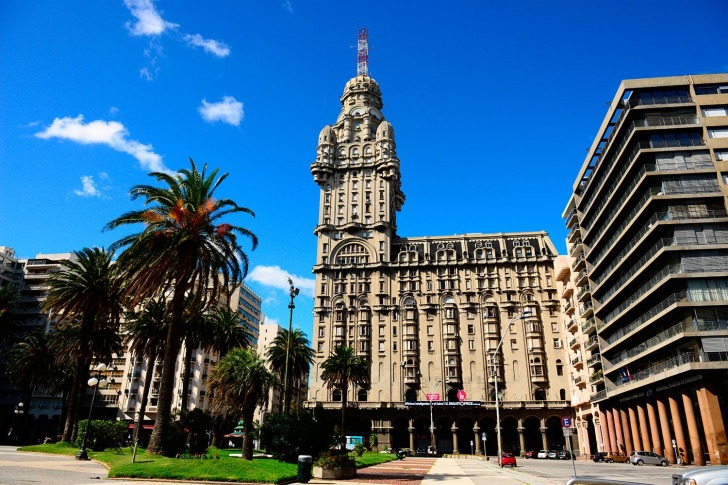
Montevideo sits on the northern shore of the Río de la Plata, facing Buenos Aires across the water and stretching along a breezy coastline that gives the city a relaxed, lived-in feel.
Uruguay’s capital does not hit visitors with the same frantic energy you get in some larger Latin American cities.
Instead, it wins people over slowly with its long rambla, historic architecture, café culture, beaches, and neighborhoods that feel more local than theatrical.
I’ve always thought Montevideo comes across as a city that is easier to handle than many first-time visitors expect.
It is not crime-free, and that would be a dangerous myth, but it is often considered one of the steadier and more manageable capitals in the region.
Travelers who use normal city smarts, stay alert at night, and choose their neighborhoods carefully usually find it rewarding rather than intimidating.
Warnings & Dangers in Montevideo

OVERALL RISK: MEDIUM
Montevideo is safer than many major capitals in South America, but it is not a place to drift around carelessly. The biggest issues for visitors are theft, robberies in certain areas, and nighttime risks in poorly lit or low-traffic zones. Most trips go smoothly, though travelers who stay alert and avoid known trouble spots do much better.

TRANSPORT & TAXIS RISK: LOW
Getting around Montevideo is usually straightforward. Main roads, buses, and registered taxis are widely used, and Carrasco Airport has an established connection to the city. The real risk is less about transport itself and more about using unregistered rides, flashing valuables in transit, or moving through isolated areas late at night after being dropped off.

PICKPOCKETS RISK: LOW
Pickpocketing is one of the more realistic concerns for visitors, especially in busy central areas, tourist zones, and around transport hubs. Montevideo is not the kind of city where every crowded street is a trap, but distracted travelers carrying phones loosely or wallets in back pockets make easy targets. Summer and high-traffic tourist periods can bring more petty street crime.

NATURAL DISASTERS RISK: LOW
Montevideo does not face the kind of dramatic natural disaster profile that defines some destinations. You are not dealing with major earthquake risk or extreme tropical conditions as a routine concern. Weather disruptions, strong winds, and storms can still affect coastal comfort and daily plans, but natural hazards are generally a secondary issue compared with everyday urban crime awareness.

MUGGING RISK: MEDIUM
Mugging and street robbery are real concerns, especially after dark and in areas where pedestrian traffic thins out. Travelers should not physically resist robbery attempts. That tells you the risk is more than theoretical. It is still not something most visitors experience, but it is serious enough to shape how you move around at night.

TERRORISM RISK: LOW
For ordinary travelers in Montevideo, terrorism is not usually the main safety concern. Crime is the more relevant risk in Uruguay. As with almost anywhere, crowded public places require ordinary vigilance, but Montevideo is not generally singled out as a major terrorism hotspot for tourists. Your attention is better spent on street awareness and neighborhood choice.

SCAMS RISK: LOW
Montevideo is not famous for elaborate tourist scams on the level of some global hotspots, but smaller cons do happen. ATM-related crime, overcharging in informal situations, and opportunistic hustles are the bigger worries. Travelers should be especially careful when withdrawing cash, particularly at night, and should stick to clearly legitimate transport and payment situations.

WOMEN TRAVELERS RISK: LOW
Montevideo is often considered a relatively comfortable destination for women traveling solo, especially compared with more chaotic regional capitals. That said, normal precautions still matter. Avoid isolated areas after dark, stay careful with nightlife logistics, and use trusted transport home. The city is manageable, but being relaxed should never turn into being careless.

TAP WATER RISK: LOW
One of Montevideo’s practical advantages is that tap water is generally considered drinkable, which removes a common travel headache. That said, some visitors with sensitive stomachs may still prefer filtered or bottled water for the first day or two. In general, though, this is not a destination where safe drinking water is usually a major tourist stress point.
Safest Places to Visit in Montevideo
Pocitos
Pocitos is one of the easiest neighborhoods for travelers to settle into.
It feels modern, active, and comfortable, with a beachside setting that attracts walkers, runners, and families.
The rambla here is one of the city’s great assets, and the area tends to feel more polished and residential than edgy.
It is a smart base for travelers who want restaurants, cafés, and a reassuring amount of foot traffic.
Punta Carretas
Punta Carretas is another strong choice if safety and convenience matter to you.
It has a more upscale feel, with shopping, dining, and easy coastal access.
It is the kind of area where travelers often feel confident taking daytime walks and enjoying the city without constantly checking over their shoulder.
It is not immune to theft, but it is among the more comfortable zones for visitors.
Carrasco
Carrasco, closer to the airport, offers a quieter and more refined atmosphere.
It feels less central to first-time sightseeing, but many travelers appreciate its cleaner, calmer character.
If you like leafy streets, a more residential mood, and a slower pace, Carrasco is a very appealing part of the city.
Parque Rodó and the Rambla Corridor
Parque Rodó and the long coastal rambla give Montevideo much of its charm.
In daytime, these areas are great for strolling, biking, and seeing how locals actually use the city.
The safest approach is simple: enjoy them in daylight or early evening, stay in busier stretches, and avoid treating quieter late-night waterfront areas as carefree walking zones.
Places to Avoid in Montevideo
Cerro and Cerro Norte
Cerro is the name that comes up repeatedly in travel warnings.
It is not a tourist area, and visitors have little reason to wander there casually.
Crime concerns are serious enough that travelers are often told to avoid it.
Cerro Norte raises even more caution and is not the kind of place for experimental sightseeing.
Casavalle, Marconi, Borro, and Bella Italia
These neighborhoods appear on many lists of higher-crime areas where travel should be avoided or limited.
Tourists are unlikely to end up in them by accident if they stick to normal sightseeing zones, but they matter because they show that Montevideo’s safety picture is not evenly distributed.
One district can feel relaxed while another carries a very different risk profile.
La Teja, Tres Ombúes, Malvín Norte, and Villa Española
These are more names travelers should recognize not because they need to visit them, but because they should know when to say no to a detour.
If a cheap rental or vague local recommendation puts you in one of these areas without a clear reason, think twice.
Saving money on accommodation is not worth ending up far from the city’s more visitor-friendly neighborhoods.
Ciudad Vieja, Plaza Independencia, and the Port Area at Night
This one catches some travelers off guard.
Ciudad Vieja is historic, interesting, and absolutely worth seeing by day, but crime tends to increase at night and on weekends around Ciudad Vieja, Plaza Independencia, Avenida 18 de Julio, and the port area.
That means timing matters.
Visit, explore, take photos, have lunch, then be much more selective after dark.
Safety Tips for Traveling to Montevideo
- Choose your neighborhood carefully. Where you stay in Montevideo will shape your whole experience. Pocitos, Punta Carretas, and parts of Carrasco are usually easier bets for travelers than cheaper options in poorly connected or higher-crime areas. A good neighborhood lowers risk before your trip even begins.
- Treat nighttime as a different city. Montevideo can feel calm and friendly by day, then much less comfortable once streets empty out. This is especially true in central districts, the port area, and parts of Ciudad Vieja. Even if a place felt fine at noon, do not assume it is equally smart at midnight.
- Do not resist a robbery. This is blunt but important. If confronted, hand things over. Replacing a phone is easier than recovering from a violent encounter. That advice exists for a reason.
- Be smart at ATMs. Use ATMs during daylight, preferably inside banks or shopping centers. Avoid withdrawing cash in isolated spots or late at night. This is one of those tips that should not be ignored.
- Keep your phone out of sight when you are not using it. Many travel thefts are crimes of opportunity, not elaborate plots. A phone left on a café table edge, held loosely while walking, or flashed repeatedly on an empty street can attract exactly the wrong kind of attention.
- Use registered transport, especially after dark. Stick with clearly legitimate taxis, rides arranged through trusted apps, or transport organized by your hotel. The risk is not only overcharging. It is also about avoiding confusion, isolation, and vulnerable moments when you are carrying luggage or unfamiliar with the area.
- Do not advertise valuables in parked cars. Even a quick stop can be enough time for a smash-and-grab. Keep bags, electronics, and shopping out of sight. Better yet, do not leave valuables in the vehicle at all.
- Visit Ciudad Vieja strategically. Go in daylight, enjoy the architecture and museums, and keep your route purposeful. It is one of Montevideo’s most interesting areas, but also one where timing and awareness matter more than visitors may expect.
- Carry only what you need for the day. Leave spare cards, extra cash, and your passport secured in your accommodation when possible. Walking around with your full financial life in one bag is never a good travel plan.
- Stay alert, but do not travel scared. The right mindset in Montevideo is measured confidence. You do not need to act paranoid, but you do need to stay switched on. Most travelers who get into trouble ignored basic precautions, especially around late-night movement, valuables, and neighborhood choice.
So... How Safe Is Montevideo Really?
Montevideo is one of those cities that rewards a balanced view.
If someone tells you it is perfectly safe, they are overselling it.
If someone makes it sound wildly dangerous, they are flattening a more nuanced reality.
The truth is that Montevideo is often easier to navigate than many large Latin American capitals, but it still has enough street crime and neighborhood variation that travelers need to pay attention.
The biggest safety issue is crime, not political instability, terrorism, or extreme environmental danger.
Montevideo is one of the parts of Uruguay where crime is most noticeable, especially petty theft and nighttime robbery in certain areas.
At the same time, the city also offers a fairly traveler-friendly infrastructure, drinkable tap water, a modern main airport, and several neighborhoods where visitors usually feel comfortable and settled.
What really matters here is context.
If you stay in a solid area like Pocitos or Punta Carretas, use sensible transport, avoid known higher-crime neighborhoods, and keep a lid on late-night wandering, Montevideo can feel pleasantly manageable.
If you act as though its calm atmosphere means zero risk, that is when mistakes happen.
For most travelers, I would call Montevideo a medium-risk destination overall, but one that leans toward rewarding and enjoyable when handled with common sense.
How Does Montevideo Compare?
| City | Safety Index |
|---|---|
 Montevideo Montevideo |
44 |
| Punta del Este |
84 |
 Potosi Potosi | 69 |
 Jermuk Jermuk | 89 |
 Hermosillo Hermosillo | 75 |
| Goris | 78 |
 Savaneta Savaneta | 90 |
 Murfreesboro Murfreesboro | 78 |
Useful Information

Visas
For many tourists, including U.S. and U.K. travelers, Uruguay allows visa-free visits of up to 90 days. Your passport should be valid for entry, and you should check your own nationality’s rules before departure because requirements can vary. If you plan to stay longer, you may need to deal with immigration authorities in advance.

Currency
Montevideo uses the Uruguayan peso. Card payments are common in the city, which means you often will not need to carry much cash. Exchange money only at reputable exchange houses or withdraw from secure bank ATMs during the day. Avoid changing cash informally, even if the rate sounds tempting.

Weather
Montevideo has a temperate coastal climate, with mild winters and warm summers rather than brutal extremes. Summer clothes work well for the hotter months, but bring a light layer for breezy evenings near the water. In cooler months, pack a jacket, closed shoes, and clothing you can layer comfortably.

Airports
Most international visitors arrive through Carrasco International Airport, the main gateway to Montevideo, located roughly 23 kilometers from downtown. It is modern and well known as the city’s primary air hub. From there, travelers typically continue into the city by taxi, prearranged transfer, or public transport, depending on budget and arrival time.

Travel Insurance
Travel insurance is a very good idea for Montevideo, even though this is not one of the region’s highest-risk destinations. Good coverage can help with theft, medical issues, delays, and trip interruptions. Since crime is the main practical concern for travelers in Uruguay, insurance adds a useful layer of backup if something goes wrong.
Montevideo Weather Averages (Temperatures)
Average High/Low Temperature
| Temperature / Month | Jan | Feb | Mar | Apr | May | Jun | Jul | Aug | Sep | Oct | Nov | Dec |
|---|---|---|---|---|---|---|---|---|---|---|---|---|
| High °C |
28 | 27 | 25 | 22 | 21 | 18 | 14 | 15 | 17 | 20 | 23 | 26 |
| Low °C |
20 | 20 | 18 | 15 | 12 | 9 | 8 | 9 | 10 | 12 | 15 | 18 |
| High °F |
82 | 81 | 77 | 72 | 70 | 64 | 57 | 59 | 63 | 68 | 73 | 79 |
| Low °F |
68 | 68 | 64 | 59 | 54 | 48 | 46 | 48 | 50 | 54 | 59 | 64 |
Uruguay - Safety by City
| City | Safety Index |
|---|---|
| Montevideo | 44 |
| Punta del Este | 84 |










No natural disasters in Montevideo
Montevideo doesn’t really have any issues with floods or droughts, much less is it known for it. You may find some instance online, but that dreally is exceedingly rare.
Something is wrong about this index
I don’t understand how the article talks about Montevideo and Uruguay being one of the safetest countries of South America, yet the safety index is 44 and for example Buenos Aires has 60 and Bogotá 46. Something is not right.
The overall crime threat level is CRITICAL as of 8 June 2023.
Montevideo is safe.
I am astonished that Montevideo received a score of 44. I grew up in KCK (46) and fully understand why it is rated so low, but during the months I spent in Montevideo, I never felt unsafe. As a retirement age, solo traveler, I went to concerts, restaurants, and night classes in Ciudad Vieja. I once found myself riding a bicycle through the Cerro neighborhood at night and did not have a single encounter that made me feel uneasy. Among cities of comparable size in Europe and Latin America, I felt safest in Montevideo.
What’s your favorite spot in the city that really captures that small-town vibe amidst all the city life?
I was surprised how the low skyline and trees on almost every street make the whole city feel unexpectedly calm, I actually felt safer walking around in the mostly sunny afternoons than I’d guessed.
The low skyline and trees on almost every street make it feel like a sunny small town, and I can’t help grinning when I stroll past the shops even if people keep warning about the crime uptick.
Trees on almost every street and that low skyline make afternoons feel mellow, but I still keep my phone in my pocket when I walk alone because the rising crime definitely puts you on edge.