


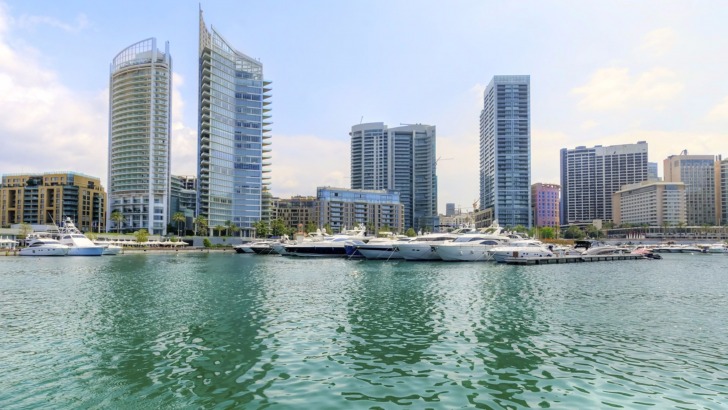
Beirut is a city that is both beautiful and complex.
It is sometimes referred to as the Paris of the Middle East.
Sitting on a peninsula in the heart of the Levant, Beirut offers travelers the beautiful turquoise waters of the Mediterranean Sea.
They also experience the dark side of the city when they look at the skyline of bullet-scarred ruins.
The city of Beirut has fallen seven times, but the people are resilient.
They rebuilt over and over again.
The history of this region does not take away from the unique pleasures there, from the Roman baths to the Bohemian bars of Mar Mikhael.
Visiting Beirut is as much a sensory experience as a physical one.
Travelers revel in the smell of jasmine, sea salt, and roasted coffee.
Given the complicated history of Lebanon’s capital city, how safe is it for travelers to visit?
Warnings & Dangers in Beirut

OVERALL RISK: HIGH
Beirut is currently on the Do Not Travel list for many Western countries and for good reason. While the spirit of this city remains, the risk of conflict does, as well. There is ongoing civil unrest in Beirut, and a fragile infrastructure makes living there a challenge. Travelers are typically welcome in the city, but the security situation in the area can shift quickly and frequently.

TRANSPORT & TAXIS RISK: MEDIUM
The traffic situation in Beirut is chaotic. The traffic laws are not rigorously enforced. The taxi system in Beirut, called Service taxis, is affordable; travelers might do better with a ridesharing app like Uber. Using ridesharing provides fixed pricing and a tracked route. Tourists should avoid unlicensed taxis, especially at night. The road maintenance is poor in the city, and there are frequent fuel shortages that impact public transport.

PICKPOCKETS RISK: MEDIUM
Petty crime is not common in Beirut, but there has been an increase recently, probably due to the economic crisis in the country. Travelers should be cautious in crowded markets, such as Burj Hammoud, and in the busy nightlife districts. It is also wise to avoid wearing expensive jewelry or carrying large amounts of cash. Secure your phone when out and about and when using public transportation.

NATURAL DISASTERS RISK: MEDIUM
Lebanon does sit on a significant fault line, so earthquakes are always a possibility. Historically, though, they happen infrequently. The more immediate risk is the seasonal weather. Heavy winter rains often cause localized flooding and landslides. The summers in Beirut are dry, putting the city at risk of fires. Travelers should educate themselves on earthquake safety before leaving for Lebanon and monitor local weather while there.

MUGGING RISK: MEDIUM
Muggings were unheard of once in Beirut, but they are becoming more common. Travelers should stay in well-lit areas at night and avoid the outskirts of the city. Stick to the well-populated areas like Hamra or Achrafieh, especially after dark. The desperate economy is making opportunistic crimes more frequent than they once were in Beirut.

TERRORISM RISK: HIGH
Many people associate Beirut with terrorism, and it remains a significant concern for travelers. The city center tends to be monitored by security forces, but the suburbs in the south and areas around refugee camps are sometimes targets for terrorists. The regional tensions in this area can lead to local violence. Travelers should avoid any political rallies, large religious gatherings, and government buildings.

SCAMS RISK: MEDIUM
Scams in the capital city typically involve currency exchange or overcharging. Travelers should avoid the street exchangers and use only reputable exchange offices. Scams are also seen in the taxi industry. Independent drivers may claim their meters are broken and then overcharge for the ride. Negotiate a price before getting into the taxi or use a rideshare app with a fixed rate.

WOMEN TRAVELERS RISK: MEDIUM
Beirut is more liberal than other cities in the area, so that solo women travelers can feel safe. There may be some catcalling and unwanted attention. Beirut is somewhat socially unstable, so harassment levels are on the rise. Female travelers should always dress modestly, especially in religious areas of the city. They should use ride-sharing apps for transportation after dark and avoid walking alone at night.

TAP WATER RISK: HIGH
Do not drink the water in Beirut. There is limited filtration, and aging infrastructure guarantees the presence of contaminants in the tap water. Even locals don’t drink the water there. Travelers should use bottled or filtered water for drinking and brushing their teeth. Ask for drinks without ice when eating out. Also, ask if they wash the fruits and vegetables with purified water before eating anything there. Ice in drinks and salads washed in tap water are the most common ways travelers to Beirut get sick.
Safest Places to Visit in Beirut
Although there are clear risks when traveling to Beirut, there are areas that offer calm.
Achrafieh is one of the oldest and wealthiest neighborhoods in the city.
It is home to the Sursock Museum and many boutique cafés.
Hamra is another popular choice for tourists.
It is home to the American University of Beirut (AUB).
There is also a diverse range of bookstores and other shops.
Corniche is a seaside promenade that is safe for walking, jogging, and just watching the sunset over the Mediterranean Sea.
Travelers who are looking for nightlife gravitate towards Mar Mikhaël and Gemmayzeh.
They are the city’s hub for the local art scene and nighttime entertainment.
If going out at night, foreigners should be wary of pickpockets.
The area is typically monitored and crowded, making it safer for tourists.
Places to Avoid in Beirut
It is essential that travelers exercise caution in many areas of Beirut.
The Southern Suburbs of the city, areas such as Haret Hraik and Bourj el-Barjneh, should be completely avoided.
Armed factions control these areas, and they are targets of military strikes.
Also, tourists should avoid the areas around the Palestinian refugee camps, such as Sabra and Shatila.
These are high-stress regions in the city and are frequently volatile.
They are also outside the jurisdiction of Lebanese security forces.
Travelers should also avoid any areas near the Syrian border or the Blue Line in the south.
There is almost constant military action there.
To the north is Tripoli, an area that sees frequent sectarian clashes.
For this reason, it is a high-risk area to avoid.
A 2020 explosion took out much of the port area.
It is under construction but poorly lit at night.
Safety Tips for Traveling to Beirut
- Monitor the “Black Market” rate for currency exchange: The official currency rate is not that significant. It is the Black Market rate that matters. You can download a currency tracking app to know the value of your money and avoid scams.
- Use ride-sharing apps: Uber and Bolt are both active in Beirut, and a safer option is to try to hail a taxi on the street. Ride-share provides a digital trail and fixed pricing, so you avoid the overcharging seen with taxis.
- Carry small denominations in USD: New USD bills are the preferred currency in Beirut, but keep the bills small. Many vendors will not be able to make change for a large bill, such as $50 or $100. Ideally, stick to a $10 bill or less.
- Avoid politics: Lebanon is a political hotspot, and many of the locals are sensitive to the issues there. Avoid discussing any politics in the city, even if you don’t think there is anyone around or that they will understand English. Definitely, steer clear of the Syrian and Israeli conflicts.
- Register with the embassy: Beirut is one place where registering with your country’s embassy is essential. This ensures your government knows you are in Lebanon. They can monitor your trip and provide evacuation and security notices.
- Avoid protests: Civil unrest is common in Beirut, and it can quickly escalate into violence. If you see a crowd gathering or signs of a protest, such as tires burning, go the other way.
- Keep a low profile: Don’t dress like a tourist. Keep expensive tech in the hotel or tucked away. Don’t pull out your phone in a public place. This will draw attention to you.
- Carry a power bank: The city rations electricity in Beirut, so many areas may only have it for a few hours each day. A power bank will allow you to charge your phone at any time. That means you have active GPS and a way to call for help if you need it.
- Don’t take photos of anything military: That would include soldiers, checkpoints, military equipment, and bases. Also, avoid taking pictures of government buildings.
- Always have a plan: You should always know where the embassy is when you go out, and the nearest hospital. Also, keep your physical passport and emergency cash safely at the hotel in case of theft.
So... How Safe Is Beirut Really?
Beirut is not your typical tourist destination.
The risk of becoming a victim of street crime is lower than you see in other major cities, but there is more to consider when visiting Beirut.
This area is not geopolitically stable.
It is in economic collapse and has a strong military presence, with considerable tension.
The incidental risk in Beirut is the real issue.
Travelers can easily get caught up in local violence just by being in the wrong place at the wrong time.
The regional security forces tend to have slow reaction times, too, so help may be difficult to find.
Also, Beirut is not known for luxury accommodations.
The infrastructure is worn down, reliable electricity is scarce, and medical supplies are scarce.
If you go there and stay in the right areas, it should be safe, but there is always a risk.
How Does Beirut Compare?
| City | Safety Index |
|---|---|
 Beirut Beirut |
45 |
 Hamden Hamden | 78 |
| Wolfeboro | 82 |
 Genoa Genoa | 60 |
| Morgantown | 80 |
| Gorham | 77 |
 Hanoi Hanoi | 72 |
Useful Information

Visas
Some nationalities are eligible for a free 30-day visa upon arrival at Beirut International Airport. It is extendable up to 90 days, as well. They include the United States, Canada, and European countries. You will need to have your passport with you, and it cannot have any Israeli stamps. Even if you don't have a physical stamp, prior travel to Israel that is disclosed or found via a digital search can also result in detention. Your passport must be valid for at least six months before your date of entry to Lebanon.

Currency
The official currency is the Lebanese Pound (LBP), but the economy in Beirut also uses USD. Dollars are acceptable in most places. Bring new bills with you. If you do need to exchange, use the local exchange bureaus. Avoid the ATMs in Beirut due to the high rates.

Weather
Beirut enjoys a Mediterranean climate. The summers from June to September are hot and humid. The winters from December to March are mild but rainy. The best times to visit Beirut are Spring and Autumn. The temperatures are pleasant. You may need heavier clothing if you decide to explore the mountains, though.

Airports
The Beirut-Rafic Hariri International Airport (BEY) is the only one in the country for commercial air travel. From the airport, you can travel to the city on a pre-booked airport transfer or ride-sharing app. The taxis at the airport will likely overcharge you.

Travel Insurance
Travel insurance is a must when going to Lebanon. Standard travel insurance policies will likely not cover a trip to Lebanon. It has a Do Not Travel advisory from most countries. You will need insurance from a provider such as World Nomads or High Risk Voyage. Choose a policy that covers high-risk zones and medical evacuation. The local hospitals in Beirut will require payment upfront and may lack essential supplies.
Beirut Weather Averages (Temperatures)
Average High/Low Temperature
| Temperature / Month | Jan | Feb | Mar | Apr | May | Jun | Jul | Aug | Sep | Oct | Nov | Dec |
|---|---|---|---|---|---|---|---|---|---|---|---|---|
| High °C |
17 | 17 | 19 | 22 | 25 | 27 | 30 | 30 | 29 | 27 | 23 | 19 |
| Low °C |
11 | 11 | 12 | 15 | 18 | 21 | 24 | 24 | 23 | 21 | 16 | 13 |
| High °F |
63 | 63 | 66 | 72 | 77 | 81 | 86 | 86 | 84 | 81 | 73 | 66 |
| Low °F |
52 | 52 | 54 | 59 | 64 | 70 | 75 | 75 | 73 | 70 | 61 | 55 |
Lebanon - Safety by City
| City | Safety Index |
|---|---|
| Beirut | 45 |




Rooftop dinner
People are friendly but I feel more comfortable going around through private transportation. Also if you extra money to burn a stay in Hotel Albergo might tickle your fancy. You can have a meal at their rooftop and my oh my a romantic evening with your partner there would be just awesome. I felt generally safe in the short time I was there.
So underrated
Lebanon is absolutely gorgeous on every level. Yes, the driving and the roads are horrific, but using private taxi transport is great, and cheap! Venture out of Beirut to see some of the most gorgeous landscapes and hot beaches and take a ride into the mountains for skiing and snow. AND TGE FOOD….I’m hungry just thinking about it. Such a vibrant country – all of it.
It’s interesting how Beirut can feel so vibrant and chaotic at the same time, especially with the nightlife pulling you in while the traffic makes even a quick trip feel like an adventure.
Traffic is a nightmare, but hey, at least the nightlife doesn’t care if you can’t find your car in the chaos.
Did you find it as wild driving through the city as I did, or is it just me getting used to the chaos?
Is it just me, or does the nightlife feel like a non-stop party that’s more chaotic than organized?
After walking by those turquoise Mediterranean waters and still smelling jasmine next to the bullet-scarred ruins, do you ever feel uneasy telling friends Beirut is safe to visit?
I walked the streets at sunset and the mix of jasmine and sea salt in the air made the city feel alive despite the scars everywhere.