


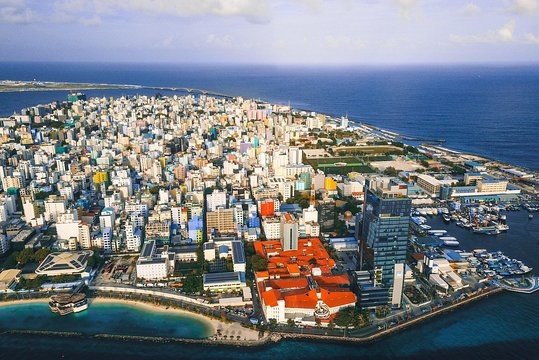
Male is one of the smallest capitals in the world, but it rarely feels small.
Packed onto a compact island in the central Maldives, this fast-moving city is the country’s political heart, transport hub, and everyday urban counterpoint to the postcard image of private resorts and overwater villas.
Most travelers pass through Male on the way to beaches and atolls, but the city itself offers a fascinating look at local life, busy markets, mosques, ferries, and streets that run on pure energy.
Safety-wise, Male is not a place that usually terrifies visitors, but it is also not the same as staying on an isolated luxury island.
You need city awareness here.
The good news is that most trips go smoothly when travelers use common sense, avoid demonstrations, and stay alert in crowded areas.
Warnings & Dangers in Male

OVERALL RISK: MEDIUM
Male is generally manageable for tourists, but I would not call it carefree. The biggest issues are petty theft, occasional political protests, and some gang-related violence in parts of greater Male. Terrorism is also taken seriously in current travel advisories, which pushes the overall rating out of the low-risk category.

TRANSPORT & TAXIS RISK: LOW
Getting around Male is usually straightforward. Visitors commonly use taxis, ferries, buses, or rideshare options, and transport is broadly considered accessible and affordable. The main risk is not dramatic crime but confusion, busy roads, and occasional delays when moving between the airport and the city or onward to other islands.

PICKPOCKETS RISK: MEDIUM
Pickpocketing is not the first thing people associate with the Maldives, but petty theft does happen. Valuables can be stolen on beaches, in hotel rooms, and in busier public areas. In Male, where space is tight and foot traffic is constant, distracted tourists are easier targets than on quiet resort islands.

NATURAL DISASTERS RISK: MEDIUM
Male faces real environmental risks, even if most visitors never experience an emergency. The Maldives has a wet monsoon season from mid-May to November, with strong winds, rough seas, and torrential rain. Advisories also mention dangerous tidal currents and the possibility of tsunamis, which matters in a low-lying island nation.

MUGGING RISK: MEDIUM
Violent street crime is not rampant in the way it is in some larger capitals, but it would be careless to call the risk low. Travel advice notes gang-related violence, including knife crime, mainly in Male and Hulhumale. Most tourists will never encounter it, but empty roads after dark are not where you want to test your luck.

TERRORISM RISK: MEDIUM
This is the category that catches many travelers off guard. Multiple current advisories warn that terrorist attacks cannot be ruled out in the Maldives and that targets could include tourist sites, transportation hubs, markets, and public facilities. That does not mean an attack is likely during your trip, but it does mean the risk is taken seriously.

SCAMS RISK: LOW
Male is not famous for elaborate tourist scam culture, especially compared with some big city destinations. Still, small overcharging issues, transport confusion, and opportunistic hustling can happen around busy transit areas. The smartest approach is to confirm fares, use established transport options, and keep bookings and payment details organized.

WOMEN TRAVELERS RISK: MEDIUM
Most women visit Male without serious trouble, but the city requires awareness. It is a conservative Muslim capital, not a resort bubble, so modest dress and culturally respectful behavior matter. Walking alone in isolated areas late at night is not a great idea, and women should be especially cautious around protests, poorly lit streets, and unfamiliar neighborhoods.

TAP WATER RISK: MEDIUM
I would play it safe here and avoid relying on tap water as a visitor. Travel health advice recommends boiling drinking water or choosing bottled water, and health guidance for the Maldives also warns travelers to avoid contaminated water. This is one of those simple habits that can save you from ruining your trip.
Safest Places to Visit in Male
Sultan Park and the National Museum Area
If you want a calmer slice of Male, the area around Sultan Park is one of the better places to start.
It is central, well known, and connected to cultural attractions rather than nightlife or isolated streets.
I like this part of the city for first-time visitors because it feels easier to navigate and gives you a softer landing into Male’s urban rhythm.
You can take in greenery, nearby landmarks, and a more relaxed pace than some of the denser commercial zones.
It is one of Male’s better-known peaceful public spaces and a good choice for travelers easing into the city.
Islamic Centre and Surrounding Civic Core
The Islamic Centre is one of Male’s signature landmarks, and the surrounding area is one of the most obvious stops for travelers seeing the city in daylight.
It is prominent, central, and active, which generally works in your favor from a safety perspective.
Busy areas are not risk-free, but they are often better than wandering into quieter side streets with no clear purpose.
Dress respectfully here, especially if you are visiting nearby religious spaces.
Local Market and Fish Market in Daylight
Male’s market district is one of the most interesting parts of the city for travelers who want something real and local.
The fish market and produce market are lively, visual, and easy to pair with a short walking route through the capital.
I would call them safest when visited during the day, with your phone and wallet secure and your attention switched on.
This is a better spot for curious daytime exploring than for late evening wandering.
Places to Avoid in Male
Isolated Streets in Greater Male After Dark
This is the biggest practical warning I’d give.
Travel guidance specifically notes gang-related violence and knife crime in Male and Hulhumale, and advises avoiding empty roads on foot, particularly after dark.
That does not mean the whole city becomes dangerous at sunset, but it does mean nighttime wandering with no plan is a bad habit here.
Stick to well-traveled routes and use transport when needed.
Protest Areas and Political Gatherings
Male is the political center of the Maldives, so demonstrations and rallies are more likely here than on resort islands.
Even peaceful protests can shift quickly, block roads, or attract a heavy police presence.
One of the easiest ways to stay safe is also one of the simplest: if you see a crowd forming for political reasons, leave the area and do not hang around to watch.
Quiet Waterfront or Transit Edges Late at Night
Transit zones are useful by day, but they can feel much less comfortable late at night, especially if you are tired, carrying bags, and not sure where you are going.
This is when overcharging, confusion, and opportunistic theft become more likely.
Around ferry points and less active waterfront stretches, it is smarter to move directly to your accommodation rather than loiter.
Safety Tips for Traveling to Male
- Avoid protests completely. Male is the kind of place where a demonstration can be easy to stumble into and annoying to escape from. Current travel advisories specifically warn travelers to avoid protests and demonstrations, even when they appear calm. Do not stop for photos or curiosity.
- Treat Male like a real city, not a resort extension. This is probably the mindset shift that matters most. The Maldives brand is all turquoise lagoons and barefoot luxury, but Male is dense, busy, and urban. That means you should walk with purpose, stay aware in crowds, and keep your valuables tucked away.
- Do not wander empty roads after dark. This is especially important if you are traveling solo. Official guidance mentions gang-related violence and knife crime in Male and Hulhumale, with a specific warning about empty roads at night. Use taxis or rideshare instead of testing your instincts.
- Carry bottled water or boil drinking water. This is not the destination where I would get casual about hydration. Travel health advice recommends bottled or boiled water, so make that your default from day one.
- Respect local laws and customs. Male is not a resort island with relaxed tourist norms. It is a conservative capital in a Muslim country. Dress modestly, especially around mosques, and remember that public behavior that might seem harmless elsewhere can be offensive or even illegal here.
- Be extremely careful with drugs and controlled substances. This is not an area for guessing or taking risks. Current travel advice warns of very severe penalties for drug offences in the Maldives. Even tiny amounts can lead to major legal trouble.
- Secure phones, wallets, and passports in crowded areas. Petty theft is not the city’s defining feature, but it happens often enough to deserve attention. Markets, ferry points, hotel lobbies, and transport connections are all places where distraction works against you.
- Plan your airport transfer before arrival. Velana International Airport is the main gateway, and the connection onward to Male is usually easy, but travel days are when people make sloppy decisions. Know whether you are taking a taxi, bus, or ferry before you land, especially if you are arriving late.
- Watch sea conditions during onward island travel. Even if Male itself is your base for only a short time, many travelers continue by boat or seaplane. During the southwest monsoon, rough seas and sudden weather shifts can affect plans. Build some flexibility into your schedule.
- Buy travel insurance that actually covers medical issues and disruptions. This is one destination where insurance is more than a checkbox. You may be moving across islands, weather can disrupt transport, and medical evacuation can get expensive fast. Good coverage gives you a much wider safety net if anything goes sideways.
So... How Safe Is Male Really?
Male is safer than many capital cities travelers visit around the world, but it is not as carefree as the glossy Maldives image might suggest.
I’d describe it as a destination where the average tourist is more likely to deal with inconvenience than serious harm, provided they use basic street smarts.
Current official guidance does not place the Maldives in the highest danger categories, but multiple governments do tell travelers to exercise increased caution because of terrorism, civil unrest, and some urban crime issues.
The city’s main risks are concentrated and manageable: petty theft, protests, occasional gang-related violence in greater Male, water-related hazards, and the need to respect strict local laws and customs.
That combination makes Male less risky than many major urban centers for violent random crime, but a bit more demanding than a resort-only Maldives trip.
Tourism remains strong, which tells you the destination continues to function at a high volume.
For most travelers, Male is safe enough to visit, but not the kind of place where you should go on autopilot.
How Does Male Compare?
| City | Safety Index |
|---|---|
 Male Male |
72 |
 Vienna Vienna | 92 |
 Stavanger Stavanger | 80 |
 Rocky Mount Rocky Mount | 52 |
 Bora Bora Bora Bora | 92 |
| Sturbridge | 88 |
| Maryland | 65 |
Useful Information

Visas
Tourists can receive a 30-day visitor visa on arrival in the Maldives at no cost, but entry requirements still matter. Travelers are generally required to complete the official traveler declaration before arrival, and you should also expect passport validity requirements, onward ticket expectations, and proof of funds.

Currency
The local currency is the Maldivian rufiyaa. U.S. dollars are also widely accepted in many tourism-related settings, and exchanging money is usually straightforward. Cards are common in tourist areas, but carrying some cash is still smart for small local purchases, taxis, or markets.

Weather
Male is warm and humid all year, with temperatures usually ranging from about 25°C to 32°C. The southwest monsoon typically runs from mid-May to November, bringing rougher seas and heavier rain, while the drier season is usually from January to March. Pack light breathable clothing, sun protection, and a rain layer.

Airports
The main airport serving Male is Velana International Airport, the country’s primary international gateway. From there, travelers connect onward by taxi, bus, or ferry depending on where they are staying. For most visitors, this is the airport that matters, and it is the usual jumping-off point for both the capital and resort transfers.

Travel Insurance
I strongly recommend travel insurance for Male and the Maldives in general. Good coverage should include medical care, emergency evacuation, and trip disruption protection. With island transfers, changing weather, and potentially expensive medical logistics, insurance is one of the smartest things you can buy before the trip.
Male Weather Averages (Temperatures)
Average High/Low Temperature
| Temperature / Month | Jan | Feb | Mar | Apr | May | Jun | Jul | Aug | Sep | Oct | Nov | Dec |
|---|---|---|---|---|---|---|---|---|---|---|---|---|
| High °C |
29 | 29 | 30 | 30 | 30 | 29 | 29 | 29 | 28 | 29 | 29 | 29 |
| Low °C |
25 | 25 | 26 | 26 | 26 | 25 | 25 | 25 | 25 | 25 | 25 | 25 |
| High °F |
84 | 84 | 86 | 86 | 86 | 84 | 84 | 84 | 82 | 84 | 84 | 84 |
| Low °F |
77 | 77 | 79 | 79 | 79 | 77 | 77 | 77 | 77 | 77 | 77 | 77 |
Maldives - Safety by City
| City | Safety Index |
|---|---|
| Male | 72 |







Being Safe in Male
I’m not familiar with Male, however, from reading your review that makes sense as there’s not a lot to do here. I will certainly take the necessary precautions and follow the tips suggested should I need to spend any length of time in Male.
We have a plan to visit male, with your advise
im sure is helping As more understand the situations there, thank you so much.
Malé might be small and crowded, but there’s something charming about getting lost in its maze of colorful streets and stumbling upon hidden local spots.
Yeah, it’s tiny on the map, but after getting crammed onto a 20-minute public ferry that smelled like diesel and sweat I actually felt how intense the place is.
Sure, because nothing screams vacation vibes like squeezing through bustling markets and constantly watching your back like you’re in some action movie, all while surrounded by scooters and a million people.
I wasn’t expecting the markets to be so lively and packed with fresh stuff, it definitely woke me up to the city’s own kind of buzz that’s way different from the calm resorts nearby.