 Costa Rica : Seguridad por Ciudad
- Cartago
- Drake Bay
- La Fortuna
- Manuel Antonio
- Monteverde
- Nosara
- Playa Flamingo
- Puerto Viejo
- Quepos
- San José
- Santa Teresa
- Tamarindo
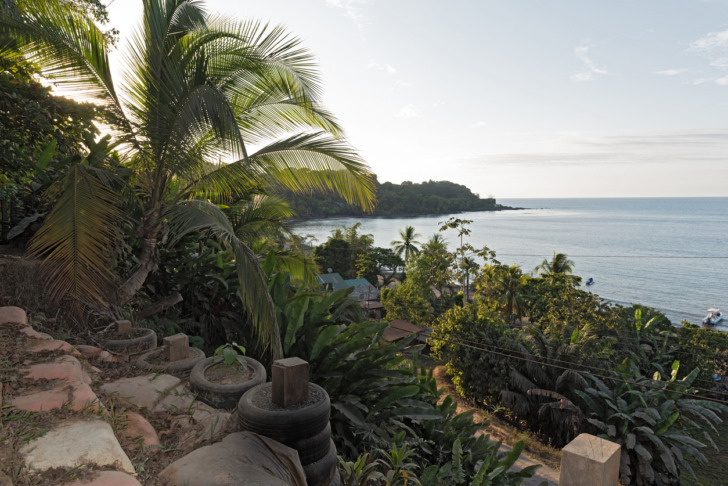
Drake Bay es una comunidad costera remota en la península de Osa, en Costa Rica, rodeada de una densa selva tropical y el océano Pacífico.
También conocida como Bahía Drake, es una de las principales puertas de entrada al Parque Nacional Corcovado y una base popular para observar la fauna, practicar esnórquel y buceo, hacer senderismo y visitar la isla del Caño.
A diferencia de las ciudades turísticas más grandes de Costa Rica, Drake Bay se siente verdaderamente aislada.
Las carreteras son limitadas, la selva rodea gran parte de la comunidad y muchos visitantes llegan en barco desde Sierpe, en lugar de conducir hasta la bahía.
En general, Drake Bay es un destino seguro, pero su aislamiento conlleva otro tipo de riesgos.
Actualmente, Costa Rica recomienda a los visitantes extremar las precauciones, ya que los delitos menores y violentos pueden afectar a los turistas en todo el país.
Sin embargo, para la mayoría de quienes visitan Drake Bay, es más probable que los mares agitados, las carreteras difíciles, la fauna silvestre, el calor tropical, las lluvias intensas, las fuertes corrientes y los servicios médicos limitados causen problemas que los delitos graves.
Advertencias y Peligros en Drake Bay

RIESGO GENERAL: MEDIO
Drake Bay is generally peaceful and receives many international visitors interested in nature and ecotourism. Crime is less visible than in major Costa Rican cities, but visitors should not become completely careless. Theft from beaches, vehicles, hotel rooms, or unattended bags can occur. Avoid leaving phones, passports, cameras, or wallets unattended while swimming. The remote location is another important consideration because police, medical facilities, and other emergency services are more limited than in Costa Rica’s major population centers.

RIESGO EN TAXIS Y TRANSPORTE: MEDIO
Transportation around Drake Bay requires more planning than in most Costa Rican tourist destinations. Many travelers reach the area by boat from Sierpe. Drake Bay can also be reached overland, but road conditions can deteriorate significantly during the rainy season, with flooding and poor surfaces sometimes affecting access. If driving, use a suitable vehicle and check current road conditions before leaving. Avoid attempting unfamiliar river crossings when water levels are high. For local transportation, use drivers recommended by your accommodation or established tour operators.

RIESGO DE CARTERISTAS: BAJO
Pickpocketing is not a major problem in Drake Bay because there are few large crowds. The small village atmosphere and nature-focused tourism mean visitors encounter fewer busy commercial areas than in San José or popular beach towns. Theft is still possible, particularly when belongings are left unattended on beaches or boats. Keep valuables inside a secure bag and bring as little as possible when swimming or hiking.

RIESGO DE DESASTRES NATURALES: MEDIO
Heavy rainfall, flooding, landslides, thunderstorms, rough seas, and earthquakes are the main natural hazards. The Osa Peninsula receives substantial tropical rainfall, particularly during the wetter months. Roads can become muddy or flooded, rivers can rise quickly, and boat transportation may become uncomfortable or unsafe. Costa Rica is also seismically active, so earthquakes are possible. Follow instructions from local authorities and accommodation staff during significant weather or seismic events.

RIESGO DE ASALTO: MEDIO
Muggings are not especially common in Drake Bay, but Costa Rica does experience armed robberies affecting tourists. The risk increases in isolated locations and after dark. Avoid walking alone along deserted beaches or poorly lit roads late at night. Do not carry unnecessary valuables or large quantities of cash. If confronted by an armed robber, do not physically resist

RIESGO DE TERRORISMO: BAJO
The terrorism risk for ordinary visitors to Drake Bay is low. There are no special terrorism precautions most travelers need to take beyond maintaining general awareness and following instructions from authorities if an unusual security incident occurs. Natural hazards and ordinary crime are much more relevant concerns.

RIESGO DE ESTAFA: BAJO
Drake Bay does not have a major problem with aggressive tourist scams. Visitors may occasionally encounter unclear transportation charges, overpriced excursions, or operators offering tours that are not exactly what was advertised. Confirm the total price and what is included before paying for boat trips, snorkeling excursions, diving, transportation, or wildlife tours. Use established operators for trips into protected areas.

RIESGO PARA MUJERES VIAJERAS: MEDIO
Women commonly visit Drake Bay independently and usually experience no problems. The main consideration is the area’s isolation. Avoid deserted beaches and jungle paths alone after dark, use trusted transportation, and tell someone where you are going before longer hikes. Standard precautions involving alcohol, drinks, accommodation security, and nighttime transportation remain appropriate.

RIESGO DE BEBER AGUA DE GRIFO: MEDIO
Water quality can vary more in remote areas than in Costa Rica’s larger cities. Many accommodations provide treated or filtered water. If you are uncertain about the water supply at your lodge or guesthouse, use bottled or properly filtered water for drinking. Carry sufficient water when hiking because heat and humidity can cause dehydration quickly.
Lugares más Seguros para Visitar en Drake Bay
Agujitas
Agujitas is the main village associated with Drake Bay and contains accommodations, restaurants, shops, tour companies, and transportation services.
It is generally peaceful during the day and early evening.
The village is small enough to explore easily on foot, although roads and paths can become muddy during heavy rain.
Normal precautions with valuables are sufficient for most visitors.
San Josecito Beach
San Josecito Beach is one of the better-known beaches near Drake Bay and is popular for swimming and snorkeling.
The beach is surrounded by rainforest and can be reached by boat or hiking routes.
Visit during daylight, watch ocean conditions, and do not leave valuables unattended while swimming.
Bring drinking water and sun protection because services are limited.
Corcovado National Park
Corcovado National Park is the main reason many travelers visit Drake Bay.
The park protects an enormous area of rainforest and supports remarkable wildlife, including monkeys, tapirs, crocodiles, snakes, and large cats.
Access from Drake Bay commonly involves boats and organized excursions, with official park infrastructure including ranger stations and designated trails.
Follow guide and ranger instructions carefully and never approach wildlife.
Caño Island
Caño Island Biological Reserve is a popular destination for snorkeling and scuba diving.
Visitors can encounter tropical fish, rays, turtles, sharks, and other marine life.
Trips should be made with established operators.
The biggest risks involve boating, currents, sun exposure, and diving rather than crime.
Lugares a Evitar en Drake Bay
Drake Bay does not contain clearly defined dangerous neighborhoods.
Most areas worth avoiding involve environmental conditions or unnecessary isolation.
Isolated Beaches After Dark
Remote beaches can become completely empty once daylight disappears.
There is little benefit to walking alone along unfamiliar jungle-backed beaches late at night.
Return to your accommodation before dark unless you are participating in an organized activity.
Jungle Trails Alone
The rainforest surrounding Drake Bay can be dense and disorienting.
Wildlife, slippery trails, rivers, heat, and rapidly changing weather create risks even when crime is not an issue.
Longer or unfamiliar jungle excursions are safer with an experienced guide.
Rivers During Heavy Rain
Do not attempt to cross swollen rivers or flooded roads.
The official Costa Rica tourism information specifically notes that road access to Drake Bay can be affected by rivers, poor road conditions, and closures caused by flooding.
A crossing that was easy earlier in the day may become dangerous after prolonged rainfall.
Open Water During Rough Conditions
Boat transportation is a normal part of visiting Drake Bay, but Pacific conditions can become rough.
If operators cancel a trip because of weather, do not pressure them to continue.
Wear a life jacket and protect electronics and important documents from water.
Tips de Seguridad para Viajar a Drake Bay
- Protect valuables at the beach. Do not leave passports, phones, wallets, or expensive cameras unattended while swimming. Bring only what you need.
- Use reputable boat operators. Boats are a normal part of transportation around Drake Bay. Choose established operators and use a life jacket.
- Take heavy rain seriously. Rain can rapidly affect rivers, trails, roads, and boat conditions. Check conditions before making longer journeys during the wet season.
- Do not approach wildlife. Monkeys, crocodiles, snakes, peccaries, and other animals are wild. Give them space and follow instructions from guides.
- Carry plenty of drinking water. High humidity and jungle hiking can cause dehydration surprisingly quickly. Carry more water than you expect to need.
- Avoid isolated beaches after dark. Drake Bay feels peaceful, but remote beaches offer little assistance if something goes wrong. Return before nightfall whenever possible.
- Use a guide in Corcovado. Experienced guides understand trails, wildlife behavior, tides, weather, and park rules and make exploring the rainforest considerably safer.
- Protect yourself from mosquitoes. Use insect repellent, wear suitable clothing when necessary, and stay in accommodation with appropriate mosquito protection.
- Keep plans flexible. Weather can delay boats, flights, tours, and road transportation. Do not build an itinerary that depends on every connection operating perfectly.
- Know how remote you are. Drake Bay is not a major resort town with a large hospital around the corner. Bring necessary medication and have insurance that can cover evacuation if a serious emergency occurs.
Entonces… ¿Qué tan Seguro es Realmente Drake Bay?
Drake Bay is generally a safe destination, particularly for travelers who understand that they are visiting a remote rainforest community rather than a conventional beach resort.
Crime exists, but it is unlikely to dominate most visits.
Petty theft is the most practical concern.
Leaving a backpack containing passports and phones unattended on a secluded beach is an unnecessary risk, even when nobody suspicious appears to be around.
Costa Rica as a whole currently carries a Level 2 advisory because both petty and violent crime affect tourists, so ordinary security precautions still apply.
The natural environment creates much more distinctive risks.
Drake Bay is surrounded by rainforest, rivers, beaches, and open Pacific water.
Heavy rainfall can turn roads into difficult journeys and affect access to the community.
Costa Rica’s tourism authorities specifically note that the road to Drake Bay can involve difficult surfaces, rivers, and flooding-related closures.
Many travelers therefore arrive by boat from Sierpe, which is also part of the adventure.
Boat journeys can involve beach landings rather than conventional docks, so travelers should expect to get their feet wet and protect electronics appropriately.
Corcovado National Park adds another dimension.
Its extraordinary biodiversity is exactly why people travel to Drake Bay, but visitors are entering a genuinely wild tropical ecosystem rather than a landscaped attraction.
Following guides, maintaining distance from animals, carrying water, and wearing suitable footwear are important.
The climate can also be exhausting.
Heat and humidity make even relatively short hikes more demanding than they might appear on a map.
Travelers should drink regularly and avoid trying to squeeze too much physical activity into the hottest parts of the day.
Medical access is the main reason not to become complacent.
Routine problems may be manageable locally, but serious injuries or illnesses can require transportation to larger medical facilities elsewhere in Costa Rica.
Overall, Drake Bay is suitable for solo travelers, couples, families, wildlife enthusiasts, and adventurous travelers.
Use normal crime precautions, respect the Pacific Ocean, prepare for tropical weather, follow wildlife rules, and understand the limitations that come with being somewhere genuinely remote.
For most visitors, those limitations are also exactly what makes Drake Bay special.
¿Cómo se Compara Drake Bay?
| Ciudad | Índice de Seguridad |
|---|---|
| Drake Bay |
76 |
| La Fortuna |
80 |
| Nosara |
79 |
| Manuel Antonio |
58 |
| Cartago |
74 |
| Quepos |
55 |
| Playa Flamingo |
78 |
 Miramar | 72 |
| Cedar Lake | 86 |
 Berberati | 20 |
| Glen Arbor | 76 |
| Medina | 71 |
 Casablanca | 50 |
Información Útil

Visados
Costa Rican entry requirements depend on nationality. Many travelers can enter without obtaining a traditional tourist visa in advance, while others require one. Visitors must have a valid passport and may need proof of onward or return travel. Check the requirements applying to your nationality before departure because permitted lengths of stay and entry conditions can vary.

Moneda
Costa Rica uses the Costa Rican colón. U.S. dollars are also commonly accepted in tourism-related businesses, although change may be returned in colones. Cards are accepted at many established lodges, restaurants, and tour companies, but Drake Bay is remote enough that cash remains useful. Bring enough cash for small restaurants, local transportation, tips, and unexpected situations rather than depending entirely on ATMs.

Clima
Drake Bay has a hot, humid tropical climate with significant rainfall. The drier period generally provides easier conditions for hiking, road travel, snorkeling, and boat excursions. The rainy season brings heavier downpours and a greater possibility of muddy trails, swollen rivers, rough seas, and road disruption. Rainforest weather can change quickly even during otherwise favorable months. Pack lightweight clothing, waterproof protection, insect repellent, sunscreen, and footwear suitable for mud and wet conditions.

Aeropuertos
Drake Bay Airport provides a much faster alternative to reaching the Osa Peninsula by road. Domestic flights can connect the area with San José, although schedules and operations can be affected by weather. Another popular approach is traveling by road to Sierpe and continuing to Drake Bay by boat. Official Costa Rican tourism information lists air, road, and boat access to the area, with boat trips varying in length depending on the departure point. Allow plenty of connection time when combining boats and flights.

Seguro de Viaje
Travel insurance is strongly recommended for Drake Bay. A useful policy should include emergency medical treatment, hospitalization, trip interruption, lost baggage, weather-related delays, and medical evacuation. Evacuation coverage is particularly valuable because Drake Bay is remote and advanced medical facilities are not immediately nearby. Travelers planning scuba diving, snorkeling, hiking, boating, or other adventure activities should confirm that those activities are covered. Coverage for weather-related disruptions is also useful because heavy rain and rough seas can affect transportation with relatively little warning.
Temperaturas medias en Drake Bay
Temperaturas máximas y mínimas
| Temperatura / mes | enero | feb. | marzo | abr. | mayo | jun. | jul. | agosto | set. | oct. | nov. | dic. |
|---|---|---|---|---|---|---|---|---|---|---|---|---|
| Máx. °C |
29 | 30 | 33 | 32 | 31 | 30 | 28 | 30 | 27 | 27 | 27 | 22 |
| Mín. °C |
25 | 26 | 26 | 25 | 26 | 25 | 26 | 23 | 25 | 25 | 25 | 22 |
| Máx. °F |
84 | 86 | 91 | 90 | 88 | 86 | 82 | 86 | 81 | 81 | 81 | 72 |
| Mín. °F |
77 | 79 | 79 | 77 | 79 | 77 | 79 | 73 | 77 | 77 | 77 | 72 |
Costa Rica - Seguridad por Ciudad
| Ciudad | Índice de Seguridad |
|---|---|
| Cartago | 74 |
| Drake Bay | 76 |
| La Fortuna | 80 |
| Manuel Antonio | 58 |
| Monteverde | 74 |
| Nosara | 79 |
| Playa Flamingo | 78 |
| Puerto Viejo | 52 |
| Quepos | 55 |
| San José | 59 |
| Santa Teresa | 72 |
| Tamarindo | 57 |